Ways to Generate a Sine Wave, Replacing the 555 with a PIC, Universal Relay Board, Wire Wrap is Alive and Well!

Newsletter #236

View in browser
Nuts & Volts - Everythinmg For Electronics
ExpressPCB
Seven Common Ways to Generate a Sine Wave

SEVEN COMMON WAYS TO GENERATE A SINE WAVE

There are literally dozens of ways to generate a sine wave. Here are some of the more popular methods you should be familiar with.

The sine wave is a naturally occurring signal shape in communications and other electronic applications. Many electronic products use signals of the sine wave form. Audio, radio, and power equipment usually generates or processes sine waves.

Read It Now!
A Mid-Level Scope for High-Level Productivity
Pico Technology
PicoScope 3000 Series PC oscilloscopes aren’t just lightweight and compact, they’re also engineered for productivity. With 2 or 4 analog channels, 16 digital channels (MSOs), 6 instruments-in-one functionality, good speed and deep memory, they offer high-quality signal measurement and high-volume task efficiency.

Get More Details Here!

Advertisement

Replacing The 555 With A PIC — Part 2 — A Digital Analog

REPLACING THE 555 WITH A PIC — PART 2: A DIGITAL ANALOG

This second article examines several of the circuits from 555 Timer IC Circuits by Forrest Mims, that are used basically as a monostable multivibrator.

Inspired by Forrest Mims and his Mini-Notebook series, we are detailing the emulation of a 555 or 556 using a PIC in several different circuits in our own set of articles. In this installment, we’ll review the specific circuits which use the 555 as a simple one-shot and discuss the PIC replacement for the same applications.

Read It Now!

These kits are great for soldering practice!

Random Number Generator Kit
Morse Code Generator Kit
Nuts siglent ad v1
Universal Relay Board

UNIVERSAL RELAY BOARD

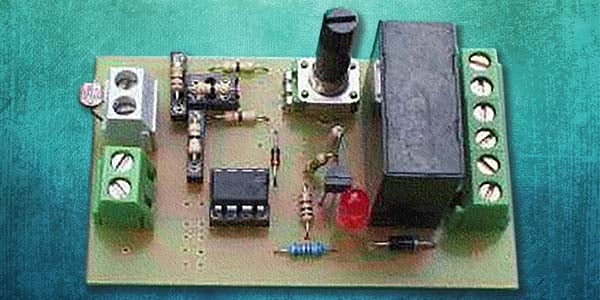
This universal relay board will allow you to drive a 12V DPDT relay using heat, cold, light, dark, sound, logic-level voltages, and just about any varying resistive output sensor you can think of.

In fact, you can use it to switch the relay ON or OFF using any voltage between zero to 12V DC or any sensor that has a varying output in this range. This is the ultimate relay board.

Build It Now!
Subscribe To Nuts & Volts
Wire Wrap Is alive And Well!

WIRE WRAP IS ALIVE AND WELL!
Here’s a different option from PCB fabrication.

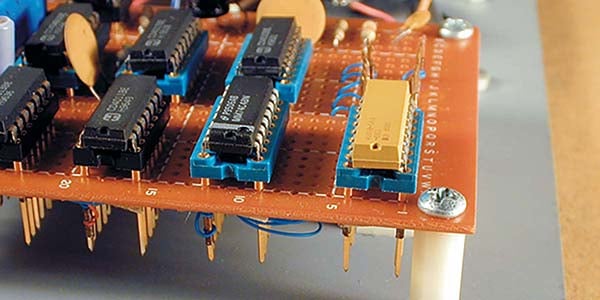
Construction articles found in electronics magazines use printed circuit boards for all but the simplest circuits, so investing time and money into the PCB fabrication process seems to be the next logical step, albeit a bit daunting for the new hobbyist. PCB fabrication is not necessarily the next step.

There is another alternative … wire wrap.

Read It Now!
Nuts & Volts On CD-ROM
Updated RC Controller
Do You Love Robots? - Subscribe To SERVO
You are receiving this email because you have been a subscriber to Nuts & Volts Magazine, or have requested to receive our email newsletters. You may unsubscribe, change your email address or content preferences at any time through the links provided below.
Facebook
Twitter
Nuts & Volts Magazine | 2279 Eagle Glen Pkwy #112-481, Corona, CA 92883
951.371.8497 | editor | www.nutsvolts.com
T & L Publications, Inc, 2279 Eagle Glen Pkwy #112-481, Corona, CA 92883, 951 371-8497

Amateur Radio Weekly Newsletter – Week of August 14, 2021

Amateur Radio Weekly Newsletter

Ham radio news, commentary, giveaways, and more!
Celebrating 25 years of service – 1995-2021
Over 8,000 subscribers!
Unsubscribe

Saturday, August 14, 2021

  • Take This Command and Shove It…
    While he may have been channeling his inner Nashville self, those are the exact words KJ4VU used to describe his tool to facilitate use of the Elgato Streak Deck in your ham shack. Telling attendees at last Saturday’s Cycle 25 Tribe Zoom meeting about his macro.exe software tool, George KJ4VU aptly described the engineering design […]
  • This jig is up. In fact, it’s about to be put to the test…
    We hams often resort to the common claim to choke the “life” out of RFI on feed-lines or other wire carrying electrical current in our shack environment (and nearby) by using ferrite materials in various forms. So it’s just a reflex action to buy those ferrites to install or to make chokes. Wind-em tight. A […]
  • Loop On Ground (LOG) Tests At VA7ST
    Single LOG / Dual LOG – courtesy: va7st.ca As man-made noise levels become ever more problematic for radio amateurs, particularly those that are serious about weak-signal DX on the lower bands (160 / 80m), the ‘Loop On Ground’ or ‘LOG’ is provin…
  • LHS Episode #424: The Weekender LXXVI
    It’s time once again for The Weekender. This is our bi-weekly departure into the world of amateur radio contests, open source conventions, special events, listener challenges, hedonism and just plain …

Thank you for being an AmateurRadio.com reader and subscriber to the Amateur Radio Newsletter.

Do you like to write? Please consider submitting an article.

Matt W1MST
Managing Editor
editor

Twitter / Facebook

How to set up your own ham radio blogGet started in less than 15 minutes

AmateurRadio.com
P.O. Box 45
Hampden ME 04444
USA

Replacing the 555 with a PIC, Lunch Box Jukebox, Gilbert Erector Set Magic, Transistor Clock

Newsletter #235

View in browser
Nuts & Volts - Everythinmg For Electronics
Nuts-siglent-ad2-animation
Replacing The 555 With A PIC — Part 1 — A Digital Analog

REPLACING THE 555 WITH A PIC — PART 1 — A DIGITAL ANALOG
Learn how to emulate a 555 or 556 using a PIC microcontroller — with no special programming required!

Inspired by Forrest Mims and his Mini-Notebook series, we’ll detail the emulation of a 555 or 556 using a PIC in several different circuits. The particular implementation this time covers both monostable and astable modes, and the PIC does not have to be reprogrammed in any way.

Read It Now!

Unleash your inner maker with this fun Arduino Based Boot Camp!

DrDuino Electronics Boot Camp
Beginning with what is an Arduino & how it works and finishing off with making your own MORSE CODE MACHINE! If you have always wanted to get into Arduino, this is for you!

Click Here To Learn More!

Advertisement

Buy It Now! Updated DIY RC Controller Kit with Receiver Recorder
AUVSI XPONENTIAL
Build a Lunch Box Jukebox

BUILD A LUNCH BOX JUKEBOX

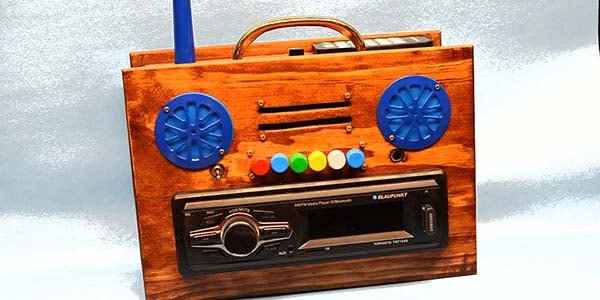
Take your fun with you in an all-in-one entertainment system you build yourself.

The Lunch Box Jukebox is a compilation of various projects to make a compact portable music, video, and game entertainment device with the Raspberry Pi Zero at the heart of the Jukebox Internet radio.

Build It Now!
Autonomous Capabilities for DoD
The Magic of the Gilbert Erector Set

THE MAGIC OF THE GILBERT ERECTOR SET
Update a classic Erector Set Ferris Wheel with an Arduino.

Erector sets helped to spark lifetime passions for building things. Take a trip down memory lane and follow the construction of a classic 1950’s Gilbert Erector set Ferris wheel with some new bells and whistles added from today’s technology.

Read It Now!
Subscribe To Nuts & Volts
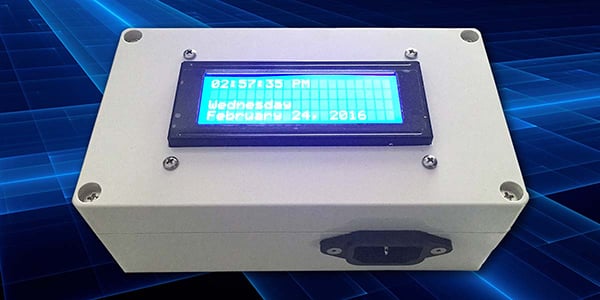
Transistor Clock

TRANSISTOR CLOCK
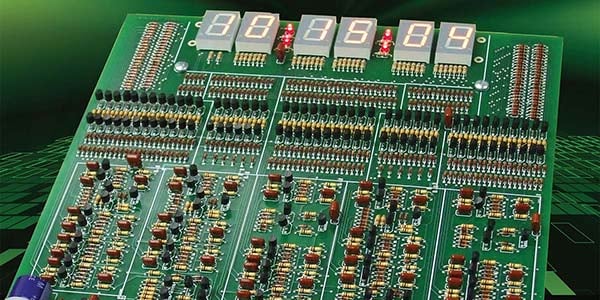
Build a digital clock using only transistors as the active elements. The final parts count is 194 transistors, 566 diodes, 400 resistors, and 87 capacitors.

This clock is made of a collection of counters. Counters made by a chain of n flip-flops result in binary ripple counters capable of dividing by 2n. A four flip-flop counter naturally counts from 0 to 15. To make it count from 0 to 9, it needs some steering logic on the flip-flop toggle inputs.

Build It Now!
NEW! Random Number Generator Kit
NEW! Morse Code Generator Kit
Nuts & Volts On CD-ROM
Altaids Computer Kit
Do You Love Robots? - Subscribe To SERVO
You are receiving this email because you have been a subscriber to Nuts & Volts Magazine, or have requested to receive our email newsletters. You may unsubscribe, change your email address or content preferences at any time through the links provided below.
Facebook
Twitter
Nuts & Volts Magazine | 2279 Eagle Glen Pkwy #112-481, Corona, CA 92883
951.371.8497 | editor | www.nutsvolts.com
T & L Publications, Inc, 2279 Eagle Glen Pkwy #112-481, Corona, CA 92883, 951 371-8497

of Podcast

Amateur Radio Weekly Newsletter

Ham radio news, commentary, giveaways, and more!
Celebrating 25 years of service – 1995-2021
Over 8,000 subscribers!
Unsubscribe

Saturday, August 7, 2021

  • Ham College 79
    Ham College episode 79 is now available for download. Extra Class Exam Questions – Part 17. E4C Receiver performance characteristics: phase noise, noise floor, image rejection, MDS, signal-to-noise ratio, noise figure, reciprocal mixing, selecti…
  • ICQ Podcast Episode 356 – QSO Today Summer Expo
    In this episode, Martin (M1MRB) is joined by Chris Howard (M0TCH), Martin Rothwell (M0SGL), Ed Durrant (DD5LP), Frank Howell (K4FMH) and Bill Barnes (WC3B) to discuss the latest Amateur / Ham Radio news. Colin (M6BOY) rounds up the news in brief and in…
  • LHS Episode #423:
    Hello and welcome to the 423rd episode of Linux in the Ham Shack. In this short-topics episode, the hosts discuss the upcoming third QSO Today Virtual Ham Expo along with …
  • Interested in Amateur Radio Digital Mode FT8 Operations?
    A VISUAL + AUDIO AIR CHECK OF DIGITAL MODE FT8 QSOs, ON THE 30-METER BAND Here is a video capture of the reception and transmission of many digital FT8-mode amateur radio high-frequency (HF; Shortwave) communication signals. This video is a front-seat view of the software operation performed at the radio room of amateur radio operator, […]
  • Button, Button. Who’s Got the Button? George KJ6VU Does. And So Can You!
    Managing your ham radio station has become increasingly complex, to say the least. We have more complex transceivers with so many features that Computer Aided Transceivers (CAT) are the norm in many circles. With this, both computer-based logging of QSOs with CAT control makes a PC de rigueur for many, many hams. But therein lies […]

Thank you for being an AmateurRadio.com reader and subscriber to the Amateur Radio Newsletter.

Do you like to write? Please consider submitting an article.

Matt W1MST
Managing Editor
editor

Twitter / Facebook

How to set up your own ham radio blogGet started in less than 15 minutes

AmateurRadio.com
P.O. Box 45
Hampden ME 04444
USA

Updating a Programming System, Audio Distortion Analyzer, The Importance of Knowing the Basics, Super-Secret Burglar Alarm

Newsletter #234

View in browser
Nuts & Volts - Everythinmg For Electronics
Nuts-siglent-ad2-animation
Updating a General-purpose Programming System

UPDATING A GENERAL-PURPOSE PROGRAMMING SYSTEM
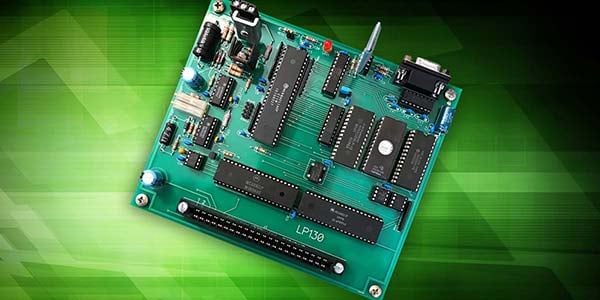
It was clearly time for an update to my LP120 that I originally built 20 years ago.

Twenty years ago, I published an article in Nuts & Volts about designing a general-purpose programming system: the LP120. I’ve used the LP120 heavily for the last 20 years to support my eight-bit design hobby. It now has uploadable drivers and programming modules for many eight-bit micros, EPROMs, and GALs. However, things have changed since 2000. Back then, few microcontrollers had more than 4K bytes of program memory. Now, eight-bit PICs have up to 64K words of memory. Clearly an update to the LP120 was called for.

Read It Now!
AUVSI XPONENTIAL
MDSETE
Build a Basic Audio Distortion Analyzer

BUILD A BASIC AUDIO DISTORTION ANALYZER

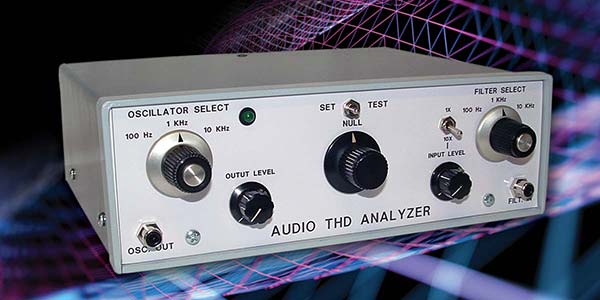
Construct a THD (Total Harmonic Distortion) analyzer that’s easy on the wallet.

Over the years with different companies I’ve worked for, I always had access to high-end audio THD analyzers. I found these very useful for design work, debugging, and repair of audio equipment. My present company has no need for them and consequently they aren’t included in their armory of test equipment. Oftentimes, I have need for one but could never afford to own one — not even a used one. I thought this would be a worthwhile project, so this article describes how to construct one.

Build It Now!
Autonomous Capabilities for DoD
The Importance of Knowing the Basics

THE IMPORTANCE OF KNOWING THE BASICS
Basic electronics knowledge is the foundation to higher understanding.

From voltage dividers to transfer functions on op-amps, why basic electronics knowledge is the foundation to higher understanding.

Read It Now!
Subscribe To Nuts & Volts
Updated DIY RC Controller Kit now with Receiver Recorder
Build a Super-Secret Invisible Burglar Alarm

BUILD A SUPER-SECRET INVISIBLE BURGLAR ALARM
Keep valuables safe and expose kids to technology at the same time.

One educational trend is an increased emphasis on STEM education aims to expose children and young adults to the world of technology with the hope they will become the next generation of much needed scientists, engineers, and mathematicians. As with all educational initiatives, the success rates are greatly amplified with the addition of an at-home educational component. This project gives one example of how to do this.

Build It Now!
NEW! Random Number Generator Kit
NEW! Morse Code Generator Kit
Nuts & Volts On CD-ROM
Altaids Computer Kit
Do You Love Robots? - Subscribe To SERVO
You are receiving this email because you have been a subscriber to Nuts & Volts Magazine, or have requested to receive our email newsletters. You may unsubscribe, change your email address or content preferences at any time through the links provided below.
Facebook
Twitter
Nuts & Volts Magazine | 2279 Eagle Glen Pkwy #112-481, Corona, CA 92883
951.371.8497 | editor | www.nutsvolts.com
T & L Publications, Inc, 2279 Eagle Glen Pkwy #112-481, Corona, CA 92883, 951 371-8497

Amateur Radio Weekly Newsletter – Week of July 31, 2021

Amateur Radio Weekly Newsletter

Ham radio news, commentary, giveaways, and more!
Celebrating 25 years of service – 1995-2021
Over 8,000 subscribers!
Unsubscribe

Saturday, July 31, 2021

  • IOTA contest partisapation
    This was the first year I took part in the IOTA (islands on the air) contest and I very much enjoyed the time I spent in the contest. It was very well attended and many Island stations were there and waiting to be contacted. I found the band conditions…
  • LHS Episode #421: YOTA Camp Deep Dive
    Hello and welcome to Episode 421 of Linux in the Ham Shack. In this episode, the hosts interview Neil Rapp, WB2VPG, coordinator of the IARU Region 2 YOTA camp and …
  • LHS Episode #422: The Weekender LXXV
    It’s time once again for The Weekender. This is our bi-weekly departure into the world of amateur radio contests, open source conventions, special events, listener challenges, hedonism and just plain …

Thank you for being an AmateurRadio.com reader and subscriber to the Amateur Radio Newsletter.

Do you like to write? Please consider submitting an article.

Matt W1MST
Managing Editor
editor

Twitter / Facebook

How to set up your own ham radio blogGet started in less than 15 minutes

AmateurRadio.com
P.O. Box 45
Hampden ME 04444
USA

Resistors: Types and Applications, Universal Oscillator Topologies, Telefunken Jubilate Restoration, Router Restarter

Newsletter #233

View in browser
Nuts & Volts - Everythinmg For Electronics
PCBFabExpress
Resistors: Types And Applications

RESISTORS: TYPES AND APPLICATIONS
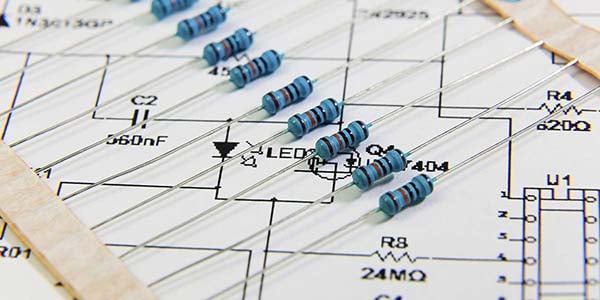
An ohm is an ohm, right? Not so fast — there are many different types of resistors.

To insure that your circuit works and stays working, use the right type of resistor. In this article, you’ll learn about the common types of resistors and their special characteristics.

Read It Now!
Subscribe To Nuts & Volts
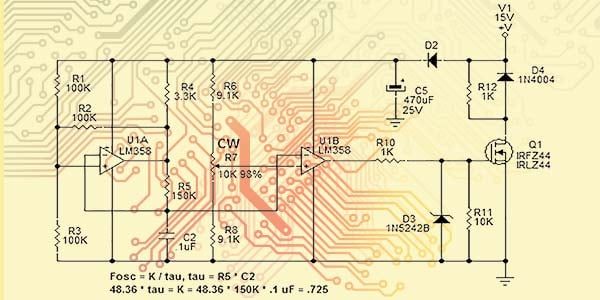
Universal Oscillator Topologies and Applications

UNIVERSAL OSCILLATOR TOPOLOGIES AND APPLICATIONS

Using the proper circuit topology for your particular application is paramount!

Explore and analyze several circuits that you can use to make light dimmers, PWM motor speed controllers, model train controllers, heater controls, and a host of other applications.

Read It Now!
Updated DIY RC Controller Kit now with Receiver Recorder
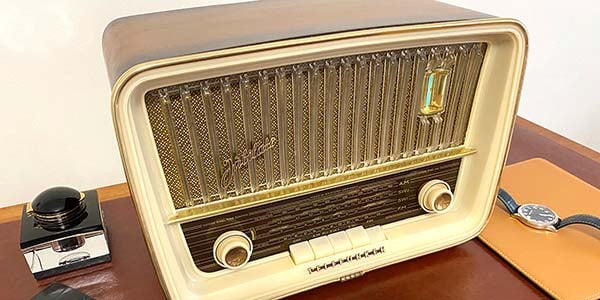
Restoration of a Vintage Telefunken Jubilate 5161W AM/SW/FM Receiver

RESTORATION OF A VINTAGE TELEFUNKEN JUBILATE 5161W AM/SW/FM RECEIVER
We continue our restoration series with a vintage Telefunken Jubilate receiver.

Every restoration — even repeat restorations of the same model — reveals something new about tubes and tube circuitry. In this restoration of the Jubilate, the focus is on reclaiming a circuit board covered with dirt, converting a selenium power supply to one based on silicon diodes, and the best ways to rejuvenate the cosmetics of your radio, including how to refinish a wooden cabinet.

Read It Now!

These new kits are great for soldering practice!

NEW! Random Number Generator Kit
NEW! Morse Code Generator Kit
A Router Restarter

A ROUTER RESTARTER
This device is much more versatile than you might think.

Originally designed as a router restarter at a remote location, this device really is a universal on-off machine that can be used in several applications. It can be programmed to function in many ways and can be controlled via a smartphone.

Read It Now!
Nuts & Volts On CD-ROM
Altaids Computer Kit
Do You Love Robots? - Subscribe To SERVO
You are receiving this email because you have been a subscriber to Nuts & Volts Magazine, or have requested to receive our email newsletters. You may unsubscribe, change your email address or content preferences at any time through the links provided below.
Facebook
Twitter
Nuts & Volts Magazine | 2279 Eagle Glen Pkwy #112-481, Corona, CA 92883
951.371.8497 | editor | www.nutsvolts.com
T & L Publications, Inc, 2279 Eagle Glen Pkwy #112-481, Corona, CA 92883, 951 371-8497

Amateur Radio Weekly Newsletter – Week of July 24, 2021

Amateur Radio Weekly Newsletter

Ham radio news, commentary, giveaways, and more!
Celebrating 25 years of service – 1995-2021
Over 8,000 subscribers!
Unsubscribe

Saturday, July 24, 2021

  • QSO Today Virtual Ham Radio Expo August 14-15 2021.
    Well, it’s that time of year again for the running of the QSO Today Virtual Ham Radio Expo this year it’s happening on August 14-15. In the first running of the Expo, there were issues with getting the videos and Q&A sessions working smoothly…
  • ICQ Podcast Episode 355 – Portable Operations Challenge 2021
    In this episode, Martin (M1MRB) is joined by Leslie Butterfield G0CIB, Dan Romanchik KB6NU and Edmund Spicer M0MNG to discuss the latest Amateur / Ham Radio news. Colin (M6BOY) rounds up the news in brief and in the episode we feature Portable Operatio…
  • Hunting For NDBs In CLE 270
    YPO – Peawanuck, ON – 401kHz (www.ve3gop.com) It’s CLE time! ‘CLE’s are ‘Co-ordinated Listening Events, and NDB DXers around the world focus their listening time on one small slice of the NDB spectrum. It’s another …
  • 10 meters was active this afternoon.
    FT8 waterfall on 10m Around 19:30 UTC I tuned to 10m and warmed up my JTDX program and I was pleased to see a very busy waterfall. I threw my call in and was answered by some U.S. stations but also the Netherlands with a report of -13. I did…
  • regrets……………
    They say that hindsight is 20/20 and really no matter what age you are I bet you have looked back on something and would have done it differently. My mom used to tell me that if things went along perfectly you would never have a chance to g…

Thank you for being an AmateurRadio.com reader and subscriber to the Amateur Radio Newsletter.

Do you like to write? Please consider submitting an article.

Matt W1MST
Managing Editor
editor

Twitter / Facebook

How to set up your own ham radio blogGet started in less than 15 minutes

AmateurRadio.com
P.O. Box 45
Hampden ME 04444
USA

All About Ferrite, Freezer Alarm Circuit, Understanding Ohm’s Law, Pinochle Social Distance Style

Newsletter #232

View in browser
Nuts & Volts - Everythinmg For Electronics
PCBFabExpress
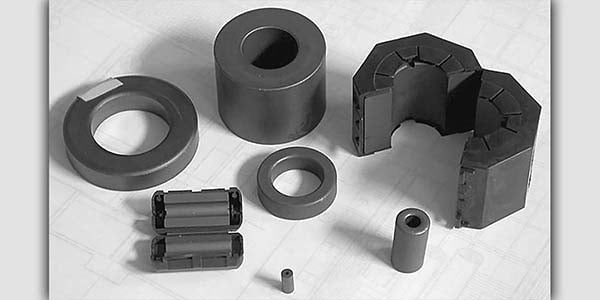
All About Ferrite

ALL ABOUT FERRITE
First created in 1930, ferrite has become an important material in the electronics and RF world.

Rings, beads, cores … find out exactly what ferrite is and what makes it ideal for a variety of uses in electronics.

Read It Now!
ExpressPCB
Build a Freezer Alarm Circuit

BUILD A FREEZER ALARM CIRCUIT

Save your food with an alarm that alerts you if the freezer’s open.

I’m not sure if it’s absent mindedness or just old age, but sometimes I’ll forget to close the food freezer lid after shopping for groceries. With food prices seemingly going up every three days, there’s really no good time to lose a pile of food because of a simple mistake. This article describes my solution to the freezer problem.

Build It Now!

NEW! In the Nuts & Volts Webstore!

RC Receiver Recorder
Understanding Ohm’s Law with a “Trick” Question

UNDERSTANDING OHM’S LAW WITH A "TRICK" QUESTION
Stimulate thinking about Ohm’s Law with these “trick” questions.

For many years, I have enjoyed learning about various aspects of our universe such as electricity, computer systems, and physics. I have met engineers who “just got it” when it came to Ohm’s Law and others who struggled due to incorrect preconceptions. Just because we can “work the math” doesn’t mean that we really understand Ohm’s Law well enough to make it work for us. This article will help you gain a real usable understanding of Ohm’s Law.

Understand It Now!
Subscribe To Nuts & Volts

These new kits are great for soldering practice!

NEW! Random Number Generator Kit
NEW! Morse Code Generator Kit
Pinochle — Social Distance Style By Chris Watson » Skip to the Extras Pinochle is an American card game typically played by three players acting alone (cutthroat) or four players in two partnerships. The game probably derives from a German variety of bezique. I belong to a group who enthusiastically plays Pinochle once a week. Unfortunately, with the present circumstance of social distancing during the COVID-19 pandemic, we have been deprived of our weekly get together. So, with today’s technology and an introduction to the virtual conferencing provided by Zoom, I decided to see if we could play Pinochle online. Here’s what I came up with. Four-handed Pinochle requires cards from four decks, using only the 10s, Jacks, Queens, Kings, and Aces. First thing therefore was to obtain 16 decks of cards and prepare four Pinochle decks — one for each of the team. The plan was to set up a meeting online using Zoom, so that we four could see and speak with each other. Next, we needed to be able to deal four hands of 20 cards each to simulate the conventional shuffle, cut, and deal process that we’re used to. Having cards in our hands, the game could proceed with the bidding, melding, scoring, and playing as per usual, relying on good faith of course, but since there was no financial aspect to our game, that wasn’t a problem. I needed a program which would deal four random hands and produce files that could be distributed to the players via email. Each player could then translate the file data into real cards from their own decks of cards. The challenge was to find or write a program to fit the bill. Program flowchart. Good old Basic from 35 years ago to the rescue! Another trip down memory lane! I found that PC-BASIC is a free online software that will run Basic programs on a Windows 10 computer since the old standby GW-Basic fell off the scene after Windows XP disappeared. I know that purists and professional programmers have long said goodbye to the Basic language, but that was all we had in the early ‘80s and it does the job. The program listed here worked very well. It was a bit slow because I was generating 1,000 random numbers each time. Experimenting with the size of the pool of random numbers it seeded, I thought I might get away with 300. But just to be safe, I left the number at 1,000. Having finished, tested, and used the program, I went on to modify it to produce the three hands needed for the cutthroat Pinochle version. It’s different because a single three card box is needed to go with the three hands, each of 15 cards only. So, all the numbers needed changing. While I was at it, I wrote a third version of the program that gives four hands of 13 cards that could be used to organize a round of Bridge, perhaps. Having run the program 10 times using different seeds to trigger the Randomize function to produce the hands for 10 games, all that remained was to collect the ASCII files that were saved as .TXT and collate the data to email to all the players. To run the Basic program, it’s necessary to run PC_BASIC first, and then run the Cards.Bas program on that platform. The two programs — CARDS and 3HAND — are included here and with the article downloads. NV 10 ‘PROGRAM IS CARDS 20 ‘P$(n) is Pinochle Deck 30 CLS : SIZ = 1000 : DIM P$(80): DIM Q(SIZ) : DIM T(100) 40 DIM NORTH$(20) : DIM SOUTH$(20) : DIM EAST$(20) : DIM WEST$(20) 50 DATA 10H,JH,QH,KH,AH,10C,JC,QC,KC,AC,10D,JD,QD,KD,AD,10S,JS,QS,KS,AS: 60 FOR N=1 TO 20 : READ P$(N) : NEXT N ‘Load 20 card deck and copy 3 times 70 FOR N=1 TO 20 : P$(N+20)=P$(N) : P$(N+40)=P$(N) : P$(N+60)=P$(N) : NEXT N 80 ‘ 90 ‘ FILL Q(n) ARRAY WITH RANDOM NUMBERS FROM 1 TO 80 100 PRINT “Enter Randomize seed “; : INPUT R$ : PRINT ,,” working” 110 R = VAL(R$) : RANDOMIZE (R) 120 FOR I=1 TO SIZ 130 X = FIX(RND*90) : IF X<1 OR X>80 THEN 130 140 Q(I)= X : NEXT I 150 ‘ 160 ‘ SELECT NUMBERS TO FILL T(n) 170 F = 1 : FOR A = 1 TO SIZ ‘Pick data 1 to 80 180 FOR B = 1 TO 80 ‘Compare with T array 190 IF Q(A) =T(B) THEN 220 200 NEXT B 210 T(F) = Q(A) : F = F+1 : IF F = 81 THEN 230 ‘go till T(n) is full 220 NEXT A 230 FOR M = 1 TO 80 : PRINT T(M); : NEXT M 240 ‘ 250 ‘ WRITE TEXT FILES & DISPLAY DATA 260 FOR N = 1 TO 20 : NORTH$(N) = P$(T(N)) : NEXT N 270 FL$=”North “+R$+”.TXT” : OPEN “O”,1,FL$ 280 PRINT#1,R$;” “; : FOR N = 1 TO 20 : PRINT#1,NORTH$(N);” “; : NEXT N 290 CLOSE #1 300 FOR N = 21 TO 40 : SOUTH$(N 20) = P$(T(N)) : NEXT N 310 FL$=”South “+R$+”.TXT” : OPEN “O”,1,FL$ 320 PRINT#1,R$;” “; : FOR N=1 TO 20 : PRINT#1,SOUTH$(N);” “; : NEXT N 330 CLOSE #1 340 FOR N = 41 TO 60 : EAST$(N 40) = P$(T(N)) : NEXT N 350 FL$=”East “+R$+”.TXT” : OPEN “O”,1,FL$ 360 PRINT#1,R$;” “; : FOR N = 1 TO 20 : PRINT#1,EAST$(N);” “; : NEXT N 370 CLOSE #1 380 FOR N = 61 TO 80 : WEST$(N 60) = P$(T(N)) : NEXT N 390 FL$=”West “+R$+”.TXT” : OPEN “O”,1,FL$ 400 PRINT#1,R$;” “; : FOR N = 1 TO 20 : PRINT#1,WEST$(N);” “; : NEXT N 410 CLOSE #1 420 ‘ 430 CLS : PRINT : PRINT : PRINT , “Hands dealt for game #”;R : PRINT 440 PRINT “North “; : FOR N=1 TO 20 : PRINT NORTH$(N);” “; : NEXT N : PRINT 450 PRINT “South “; : FOR N=1 TO 20 : PRINT SOUTH$(N);” “; : NEXT N : PRINT 460 PRINT “East “; : FOR N=1 TO 20 : PRINT EAST$(N);” “; : NEXT N : PRINT 470 PRINT “West “; : FOR N=1 TO 20 : PRINT WEST$(N);” “; : NEXT N : PRINT 480 PRINT “ “ : PRINT ,”**********************************************” 490 END CARDS program. 10 ‘PROGRAM IS 3HAND 20 CLS : SIZ=1000 ‘P$(n) is 3 hand deck 30 DIM P$(48): DIM Q(SIZ) : DIM T(100) ‘Q(n) are random numbers 40 DIM PLAY1$(20) : DIM PLAY2$(20) : DIM PLAY3$(20) 50 DATA 9H,10H,JH,QH,KH,AH,9C,10C,JC,QC,KC,AC : ‘Single deck 60 DATA 9D,10D,JD,QD,KD,AD,9S,10S,JS,QS,KS,AS 70 FOR N=1 TO 24 : READ P$(N) : NEXT N ‘Load 24 card deck 80 FOR N=1 TO 24: P$(N+24)=P$(N) : NEXT N ‘twice 90 ‘ 100 ‘ FILL Q(n) ARRAY WITH RANDOM NUMBERS FROM 1 TO 48 110 PRINT “Enter Randomize seed “; : INPUT R$ : PRINT ,,” working” 120 R = VAL(R$) : RANDOMIZE (R) 130 FOR I=1 TO SIZ 140 X = FIX(RND*50) : IF X<1 OR X>48 THEN 140 150 Q(I)= X : NEXT I 160 ‘ 170 ‘ SELECT NUMBERS TO FILL T(n) 180 F=1 : FOR A = 1 TO SIZ ‘Pick data (1 to 48) 190 FOR B = 1 TO 48 ‘Compare with T array 200 IF Q(A) = T(B) THEN 230 ‘If present try again 210 NEXT B 220 T(F) = Q(A) : F = F+1 : IF F = 49 THEN 240 ‘go till T(n) is full 230 NEXT A 240 FOR M = 1 TO 48 : PRINT T(M); : NEXT M 250 ‘ 260 ‘ WRITE (.TXT) FILES & DISPLAY DATA 270 FOR N = 1 TO 15 : PLAY1$(N) = P$(T(N)) : NEXT N 280 FL$=”Play1 “+R$+”.TXT” : OPEN “O”,1,FL$ 290 PRINT#1,R$;” “; : FOR N = 1 TO 15 : PRINT#1,PLAY1$(N);” “; : NEXT N 300 CLOSE #1 310 FOR N = 16 TO 30 : PLAY2$(N 15) = P$(T(N)) : NEXT N 320 FL$=”Play2 “+R$+”.TXT” : OPEN “O”,1,FL$ 330 PRINT#1,R$;” “; : FOR N=1 TO 15 : PRINT#1,PLAY2$(N);” “; : NEXT N 340 CLOSE #1 350 FOR N = 31 TO 45 : PLAY3$(N 30) = P$(T(N)) : NEXT N 360 FL$=”Play3 “+R$+”.TXT” : OPEN “O”,1,FL$ 370 PRINT#1,R$;” “; : FOR N = 1 TO 15 : PRINT#1,PLAY3$(N);” “; : NEXT N 380 CLOSE #1 390 FOR N = 46 TO 48 : BOX$(N 45) = P$(T(N)) : NEXT N 400 FL$=”Box “+R$+”.TXT” : OPEN “O”,1,FL$ 410 PRINT#1,R$;” “; : FOR N = 1 TO 3 : PRINT#1,BOX$(N);” “; : NEXT N 420 CLOSE #1 430 ‘ 440 CLS : PRINT : PRINT : PRINT , “Hands dealt for game #”; R : PRINT 450 PRINT “Player1 “; : FOR N=1 TO 15 😛RINT PLAY1$(N);” “; :NEXT N : PRINT,,”” 460 PRINT “Player2 “; : FOR N=1 TO 15 😛RINT PLAY2$(N);” “; :NEXT N : PRINT,,”” 470 PRINT “Player3 “; : FOR N=1 TO 15 😛RINT PLAY3$(N);” “; :NEXT N : PRINT,,”” 480 PRINT “Box”; R; : PRINT “ “;: FOR N=1 TO 3 : PRINT BOX$(N);” “; : NEXT N 490 PRINT ,,,,”” : PRINT ,”***************************************” 500 END 3HAND program. Downloads download 202004-Watson.zip What’s in the zip? CARDS Program 3HAND Program Comments

PINOCHLE — SOCIAL DISTANCE STYLE
What do you do when you can’t play cards together because of the pandemic? You figure out a way to do it electronically over Zoom!

I belong to a group who enthusiastically plays Pinochle once a week. Unfortunately, with the present circumstance of social distancing during the COVID-19 pandemic, we have been deprived of our weekly get together. So, with today’s technology and an introduction to the virtual conferencing provided by Zoom, I decided to see if we could play Pinochle online.

Read It Now!
Nuts & Volts On CD-ROM
DIY RC Controller
Do You Love Robots? - Subscribe To SERVO
You are receiving this email because you have been a subscriber to Nuts & Volts Magazine, or have requested to receive our email newsletters. You may unsubscribe, change your email address or content preferences at any time through the links provided below.
Facebook
Twitter
Nuts & Volts Magazine | 2279 Eagle Glen Pkwy #112-481, Corona, CA 92883
951.371.8497 | editor | www.nutsvolts.com
T & L Publications, Inc, 2279 Eagle Glen Pkwy #112-481, Corona, CA 92883, 951 371-8497

Amateur Radio Weekly Newsletter – Week of July 17, 2021

Amateur Radio Weekly Newsletter

Ham radio news, commentary, giveaways, and more!
Celebrating 25 years of service – 1995-2021
Over 8,000 subscribers!
Unsubscribe

Saturday, July 17, 2021

Thank you for being an AmateurRadio.com reader and subscriber to the Amateur Radio Newsletter.

Do you like to write? Please consider submitting an article.

Matt W1MST
Managing Editor
editor

Twitter / Facebook

How to set up your own ham radio blogGet started in less than 15 minutes

AmateurRadio.com
P.O. Box 45
Hampden ME 04444
USA