Choosing an O’scope, Heart Pulse Sensor, Simple Transistor and IC Circuits, Shot in the Arm for VR-AR

Newsletter #231

View in browser
Nuts & Volts - Everythinmg For Electronics
PCBFabExpress
Nuts siglent ad v1
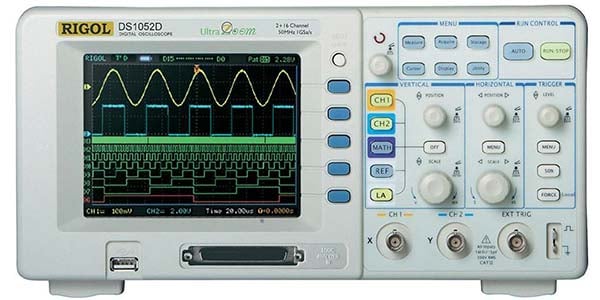
Choosing an Oscilloscope

CHOOSING AN OSCILLOSCOPE
Sixteen tips that can make selecting the appropriate oscilloscope for your task at hand a lot easier.

All sorts of questions arise when choosing a new digital oscilloscope (DSO) — it can be somewhat daunting!

Read It Now!
1 GHz PC-Based, Real-Time MSO
Pico Technology
Announcing 750 MHz and 1 GHz model PicoScope 6000E Series PC-based, real-time oscilloscopes from Pico Technology. These top end devices also offer 4 analog channels, 16 digital channels, available FlexRes capabilities, up to 4 GS of capture memory and 21 built-in serial protocol decoder/analyzers plus much more.
Get More Details Here!

Advertisement

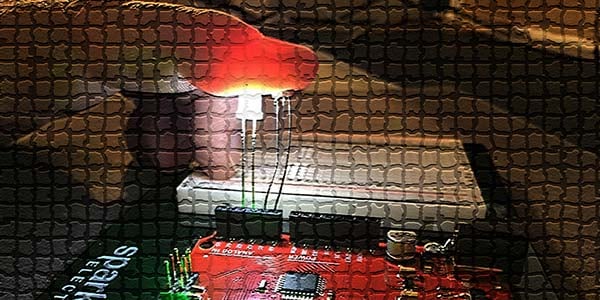
Build an Instant Heart Pulse Sensor

BUILD AN INSTANT HEART PULSE SENSOR

Make your own version of a Fitbit of sorts for monitoring blood flow.

In about 10 minutes and for about $6, you can display the blood flow through your finger. From this measurement, you can extract your heart rate, check for arrhythmia, and even modulate a red light to pulsate with your heart rate. Here’s how.

Build It Now!

These new kits are great for soldering practice!

NEW! Random Number Generator Kit
NEW! Morse Code Generator Kit
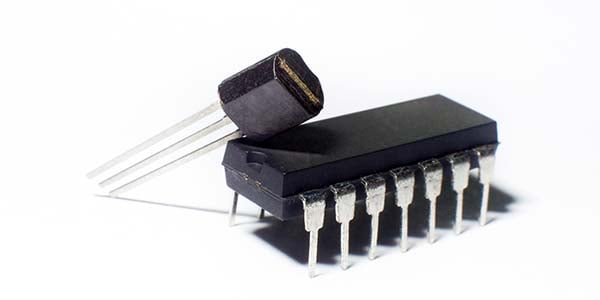
Some Simple Transistor and IC Circuits

SOME SIMPLE TRANSISTOR AND IC CIRCUITS
Two Nuts & Volts questions motivated me to relearn about bipolar transistors.

This article started as an attempt to answer two questions posed in the Tech Forum here in Nuts & Volts: one for an LED fader and a second one on how to determine which type of transistor to use in a given circuit. Turns out both questions use a transistor. Here’s what I came up with.

Read It Now!
Subscribe To Nuts & Volts
A Shot in the Arm for Online VR and AR

A SHOT IN THE ARM FOR ONLINE VR AND AR
With the current viral scare, shopping from home makes more sense.

The world’s focus on fomites — germs on surfaces — is a shot in the arm for online virtual reality and augmented reality applications ranging from online courseware, task trainers, and sales of apparel and accessories, to fresh fruit, vegetables, and meats. I’m sure that — more than ever before — I’m not alone in my willingness to try any reasonable VR or AR solution to grocery shopping.

Read It Now!
Nuts & Volts On CD-ROM
DIY RC Controller
Do You Love Robots? - Subscribe To SERVO
You are receiving this email because you have been a subscriber to Nuts & Volts Magazine, or have requested to receive our email newsletters. You may unsubscribe, change your email address or content preferences at any time through the links provided below.
Facebook
Twitter
Nuts & Volts Magazine | 2279 Eagle Glen Pkwy #112-481, Corona, CA 92883
951.371.8497 | editor | www.nutsvolts.com
T & L Publications, Inc, 2279 Eagle Glen Pkwy #112-481, Corona, CA 92883, United States, 951 371-8497

Amateur Radio Weekly Newsletter – Week of July 10, 2021

Amateur Radio Weekly Newsletter

Ham radio news, commentary, giveaways, and more!
Celebrating 25 years of service – 1995-2021
Over 8,000 subscribers!
Unsubscribe

Saturday, July 10, 2021

  • ICQ Podcast Episode 354 – 8 Watt Handie Talkie
    In this episode, Martin (M1MRB) is joined by Chris Howard (M0TCH), Ed Durrant (DD5LP) and Frank Howell (K4FMH) to discuss the latest Amateur / Ham Radio news. Colin (M6BOY) rounds up the news in brief and this episode’s feature – 8 Watt Handie Talkie. …
  • LHS Episode #420: No No Jar Jar
    Hello and welcome to the 420th installment of Linux in the Ham Shack. Smoke ’em if you got ’em! In this episode the hosts discuss Youths on the Air 2021, …
  • LHS Episode #420: No No Jar Jar
    Hello and welcome to the 420th installment of Linux in the Ham Shack. Smoke ’em if you got ’em! In this episode the hosts discuss Youths on the Air 2021, …
  • AmateurLogic Shorts 9: 18650 Battery Wraps
    Tommy follows up on a previous short and shows us why and how we should replace damaged battery wraps on reclaimed 18650 batteries.

    Please Subscribe and click the Like and Share buttons if you enjoy our content. Note AmateurLogic Shorts are only avail…

Thank you for being an AmateurRadio.com reader and subscriber to the Amateur Radio Newsletter.

Do you like to write? Please consider submitting an article.

Matt W1MST
Managing Editor
editor

Twitter / Facebook

How to set up your own ham radio blogGet started in less than 15 minutes

AmateurRadio.com
P.O. Box 45
Hampden ME 04444
USA

Learn from Mistakes, Breaking the Arduino Speed Limit, Home Simulator, The Remarkable CSS555

Newsletter #230

View in browser
Nuts & Volts - Everythinmg For Electronics
PCBFabExpress
How To Succeed At Circuit Design By Learning From These Mistakes

HOW TO SUCCEED AT CIRCUIT DESIGN BY LEARNING FROM THESE MISTAKES
Getting better at a craft often requires you to learn from your mistakes.

Follow along with this circuit design to see where the problems and pitfalls occurred, so that you can accelerate your learning from someone else’s errors.

Read It Now!
Unleash your inner maker with this fun Arduino Based Boot Camp!
DrDuino Electronics Boot Camp
Beginning with what is an Arduino & how it works and finishing off with making your own MORSE CODE MACHINE! If you have always wanted to get into Arduino, this is for you!

Click Here To Learn More!

Advertisement

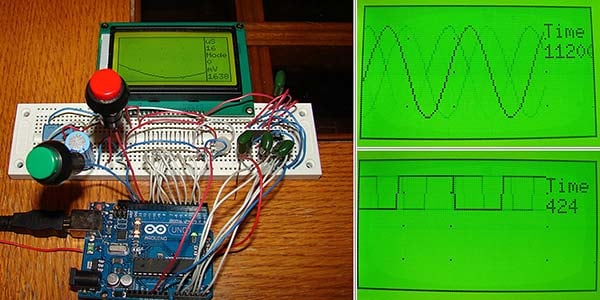
Breaking the Arduino Speed Limit

BREAKING THE ARDUINO SPEED LIMIT

Admit it, we all like to do it — break the speed limit. Usually, it’s just a little bit.

Just how fast can you push the Arduino platform before it releases that magic smoke? Very fast, actually.

Read It Now!

These new kits are great for soldering practice!

NEW! Random Number Generator Kit
NEW! Morse Code Generator Kit
A Full Motion Home Simulator

A FULL MOTION HOME SIMULATOR
Go “virtually” anywhere with your own homebrew flight simulator.

Building a full motion simulator will require some mechanical work, electronic work, and even a little programming, but surprisingly, it’s not a great deal more difficult than many other Nut & Volts projects. I’m confident that the first time you step into your flying machine and leave reality for cyberspace, you’ll agree it is worth the effort!

Build It Now!
Subscribe To Nuts & Volts
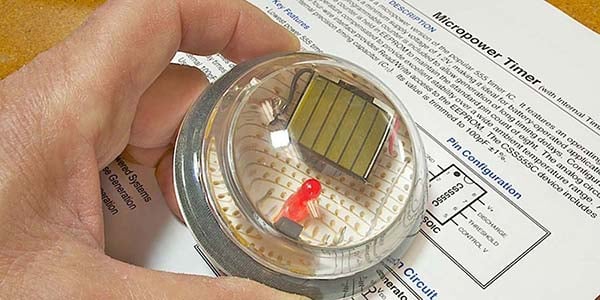
The Remarkable CSS555

THE REMARKABLE CSS555
The CSS555 is a micropower programmable version of the 555 family of timer ICs.

It operates at a current under 5 µA and a supply voltage from 5.5V down to 1.2V. These qualities make it particularly well-suited for long lasting battery and small solar powered projects.

Read It Now!
Nuts & Volts On CD-ROM
DIY RC Controller
Do You Love Robots? - Subscribe To SERVO
You are receiving this email because you have been a subscriber to Nuts & Volts Magazine, or have requested to receive our email newsletters. You may unsubscribe, change your email address or content preferences at any time through the links provided below.
Facebook
Twitter
Nuts & Volts Magazine | 2279 Eagle Glen Pkwy #112-481, Corona, CA 92883
951.371.8497 | editor | www.nutsvolts.com
T & L Publications, Inc, 2279 Eagle Glen Pkwy #112-481, Corona, CA 92883, United States, 951 371-8497

Amateur Radio Weekly Newsletter – Week of July 3, 2021

Amateur Radio Weekly Newsletter

Ham radio news, commentary, giveaways, and more!
Celebrating 25 years of service – 1995-2021
Over 8,000 subscribers!
Unsubscribe

Saturday, July 3, 2021

  • Ham College 78
    Ham College episode 78 is now available for download. Extra Class Exam Questions – Part 16. E4B Measurement technique and limitations: instrument accuracy and performance limitations, probes, techniques to minimize errors, measurement of Q, inst…
  • Field Day – 200 QSOs with a Flashlight Battery
    Field Day was an experiment this year. I ran my operation for nine hours using a 5V 18650 battery. I made 200 QSOs before calling it quits. I operated on the deck with an MTR 4-B designed by KD1JV. The antenna was an 88 foot doublet up about 45 feet. I used the ZM-2 tuner. […]
  • LHS Episode #418: ARDC Deep Dive
    Hello and welcome to the 418th installment of Linux in the Ham Shack. In this episode, we talk to part of the team from Amateur Radio Digital Communications, a group …
  • LHS Episode #419: The Weekender LXXIV
    It’s time once again for The Weekender. This is our bi-weekly departure into the world of amateur radio contests, open source conventions, special events, listener challenges, hedonism and just plain …

Thank you for being an AmateurRadio.com reader and subscriber to the Amateur Radio Newsletter.

Do you like to write? Please consider submitting an article.

Matt W1MST
Managing Editor
editor

Twitter / Facebook

How to set up your own ham radio blogGet started in less than 15 minutes

AmateurRadio.com
P.O. Box 45
Hampden ME 04444
USA

Build a Laser Theremin, PCB Assembly Jig, Keep Components Cool, The Capacitance Connection

Newsletter #229

View in browser
Nuts & Volts - Everythinmg For Electronics
PCBFabExpress
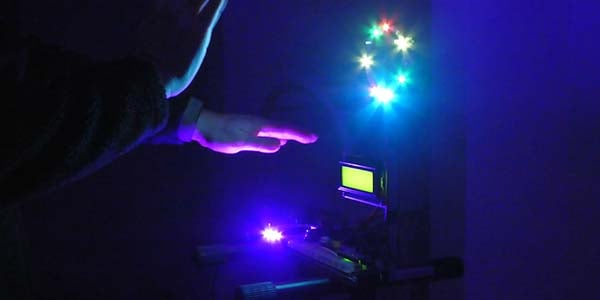
Build the FLiPVox Laser Theremin

BUILD THE FLIPVOX LASER THEREMIN
Here’s an analog style laser Theremin with its own built-in synthesizer.

In my previous Theremin article, I described the first of my laser Theremin projects: the LASERVox. This is a simple-to-construct Theremin-like device that acts as a MIDI controller for a synthesizer. In that article, I discussed the possibility of a more analog style laser Theremin that has its own built-in synthesizer or pitch generator. That’s the topic of this article! We’ll build the FLiPVox: a continuous pitch laser Theremin with its own mini synthesizer.

Build It Now!
Unleash your inner maker with this fun Arduino Based Boot Camp!
DrDuino Electronics Boot Camp
Beginning with what is an Arduino & how it works and finishing off with making your own MORSE CODE MACHINE! If you have always wanted to get into Arduino, this is for you!

Click Here To Learn More!

Advertisement

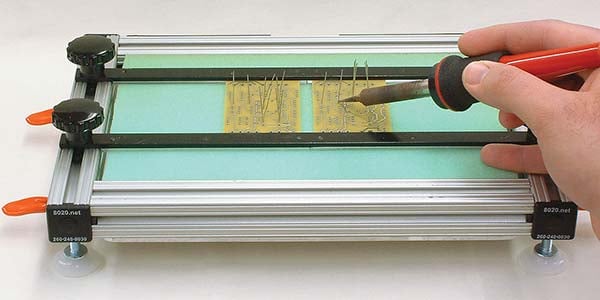
Build A Circuit Board Assembly Jig

BUILD A CIRCUIT BOARD ASSEMBLY JIG

Gain a third hand when assembling PCBs.

If you spend a considerable amount of time assembling and soldering PCBs, then you’re gonna love this "third hand." Even without all the bells and whistles, having a proper PCB assembly jig goes a long way toward making electronics a more enjoyable hobby.

Build It Now!
Pololu Independence Day Sale
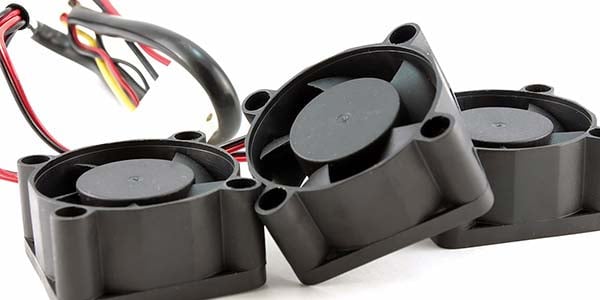
Keeping Those Components Cool

KEEPING THOSE COMPONENTS COOL
This basic circuit allows you to control the speed of a fan to suit your noise tolerance.

Not long ago, I put together a project, housed in a plastic box, which contained a component that could get hot enough to self-destruct in a closed box. I added a small cooling fan to the box, but the noise was excessive …

Read It Now!
PCBWay
The Capacitance Connection

THE CAPACITANCE CONNECTION
Use a multimeter to insure you have enough wire before an installation.

After installing some low voltage yard lights, I applied power and one of the strings did not work. I went through the normal troubleshooting of measuring the voltages and resistance. It became quite easy to tell that I had an open somewhere between the transformer and the first light in the string, but where?

Read It Now!
Nuts & Volts On CD-ROM
NEW! Random Number Generator Kit
DIY RC Controller
NEW! Morse Code Generator Kit
Subscribe To Nuts & Volts
Do You Love Robots? - Subscribe To SERVO
You are receiving this email because you have been a subscriber to Nuts & Volts Magazine, or have requested to receive our email newsletters. You may unsubscribe, change your email address or content preferences at any time through the links provided below.
Facebook
Twitter
Nuts & Volts Magazine | 2279 Eagle Glen Pkwy #112-481, Corona, CA 92883
951.371.8497 | editor | www.nutsvolts.com
T & L Publications, Inc, 2279 Eagle Glen Pkwy #112-481, Corona, CA 92883, United States, 951 371-8497

Amateur Radio Weekly Newsletter – Week of June 26, 2021

Amateur Radio Weekly Newsletter

Ham radio news, commentary, giveaways, and more!
Celebrating 25 years of service – 1995-2021
Over 8,000 subscribers!
Unsubscribe

Saturday, June 26, 2021

  • RFI noise antenna issue
    I have decided to give my MFJ 1026 noise canceller a call to action and combat this RFI I have been having. In the past, I did own a 1026 and used it with great success to remove RFI our plasma TV was giving me. With the MFJ 1026, you need to hav…
  • LHS Episode #417: The Gang’s All Here
    Hello and welcome to Episode 417 of Linux in the Ham Shack. In this episode, the hosts are all gathered together in one place for the recording for the first …
  • Hunting For NDBs In CLE269
    AP-378 Active Pass, Mayne IslandIt’s CLE time! ‘CLE’s are ‘Co-ordinated Listening Events, and NDB DXers around the world focus their listening time on one small slice of the NDB spectrum. It’s another normal one again wi…

Thank you for being an AmateurRadio.com reader and subscriber to the Amateur Radio Newsletter.

Do you like to write? Please consider submitting an article.

Matt W1MST
Managing Editor
editor

Twitter / Facebook

How to set up your own ham radio blogGet started in less than 15 minutes

AmateurRadio.com
P.O. Box 45
Hampden ME 04444
USA

Electric Brains of YesterYear, PIC Trainer, Circuit Dev Process, Garage Sentinel

Newsletter #228

View in browser
Nuts & Volts - Everythinmg For Electronics
PCBFabExpress
The Electric Brains of Yesteryear

THE ELECTRIC BRAINS OF YESTERYEAR
Get Geniacs and Brainiacs from decades ago working again.

In the 1950s and ‘60s, Popular Electronics and other magazines carried ads for strange looking machines called Geniacs and Brainiacs. The ads claimed they were “electric brains” that could play Tic-Tac-Toe and NIM. A while ago, I bought several sets on eBay and I would like to share my experiences of learning about them and my sometimes frustrating — but successful — efforts to get them to work.

Read It Now!
Animatronics Book
Build Your Own PIC Trainer from Surplus

BUILD YOUR OWN PIC TRAINER FROM SURPLUS

Assemble a versatile and high quality PIC trainer from stuff in your junkbox that will make going from concept to working project a breeze.

Belying its humble origin, this really is an open-ended and high quality learning tool. Thanks to the breadboard-like nature of the trainer, it’s a snap to go from a theoretical concept to a working project in a matter of minutes.

Build It Now!
ExpressPCB
The Circuit Development Process

THE CIRCUIT DEVELOPMENT PROCESS

There’s a deep sense of satisfaction that results from developing, building, testing, and ultimately using a circuit of your own design.

It’s the creative process, after all, that attracts most electronics enthusiasts.

Read It Now!
Subscribe To Nuts & Volts
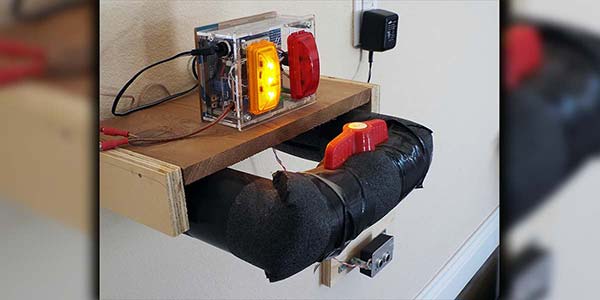
The Garage Sentinel

THE GARAGE SENTINEL
Here’s a parking assistant project that will save you from the ’ol hanging tennis ball.

A tennis ball suspended from the ceiling at just the right spot is the classic solution, but with more than one person using the garage — possibly driving different cars or just backing in — that just wouldn’t cut it. Here’s a high tech solution for the high tech hobbyist.

Build It Now!

Super Awesome Cube Kit

Need soldering experience? This is the kit for you!

Soldering skills are required by industry manufacturing electronic products as well as electronics enthusiasts developing new prototypes. What distinguishes the skilled solderer is the ability to perform work at a level that insures reliability. Here’s a kit that even though it’s electronically simple, it provides the builder with an array of soldering challenges and hours of soldering experience.

Find It in the NV Webstore
Do You Love Robots? - Subscribe To SERVO
Nuts & Volts On CD-ROM
RetroGame Kit
DIY RC Controller
Altaids Computer Kit
You are receiving this email because you have been a subscriber to Nuts & Volts Magazine, or have requested to receive our email newsletters. You may unsubscribe, change your email address or content preferences at any time through the links provided below.
Facebook
Twitter
Nuts & Volts Magazine | 2279 Eagle Glen Pkwy #112-481, Corona, CA 92883
951.371.8497 | editor | www.nutsvolts.com
T & L Publications, Inc, 2279 Eagle Glen Pkwy #112-481, Corona, CA 92883, United States, 951 371-8497

Amateur Radio Weekly Newsletter – Week of June 19, 2021

Amateur Radio Weekly Newsletter

Ham radio news, commentary, giveaways, and more!
Celebrating 25 years of service – 1995-2021
Over 8,000 subscribers!
Unsubscribe

Saturday, June 19, 2021

  • AmateurLogic 156: Radiogram
    AmateurLogic.TV Episode 156 is now available for download. What’s a Shortwave Radiogram? OpenWebRX v1.0 Update. UBLOX7 Winlink and Time Sync using GPS. 1:04:56 Download YouTube
  • LHS Episode #412: WFView Deep Dive
    Hello and welcome to the 412th episode of Linux in the Ham Shack. In this episode, we have a fantastic interview with Elliott, Phil and Roeland, developers of the WFView …
  • LHS Episode #413: The Weekender LXXII
    It’s time once again for The Weekender. This is our bi-weekly departure into the world of amateur radio contests, open source conventions, special events, listener challenges, hedonism and just plain …
  • Ham College 77
    Ham College episode 77 is now available for download. Extra Class Exam Questions – Part 15. E4A Test equipment: analog and digital instruments, spectrum analyzers, antenna analyzers, oscilloscopes, RF measurements, computer-aided measurements. 5…
  • AmateurLogic Shorts 6: Automate Your Pi
    The Cheap Old Man wants to “Automate Your Pi”.

    Please Subscribe and click the Like and Share buttons if you enjoy our content. Note AmateurLogic Shorts are only available on YouTube.

  • AmateurLogic Shorts 7: Windows Sandbox
    A test environment for Windows that protects your PC against potentially dangerous programs you might need to run.

    Please Subscribe and click the Like and Share buttons if you enjoy our content. Note AmateurLogic Shorts are only available on YouTube.

  • Single-Yagi EME
    After being absent from 2m EME (moonbounce) for the past couple of years, I decided to spark-up again this spring to see if my simple system was still up to the task.Pretty much every month, during the moon’s sweep through its northern declinat…
  • AmateurLogic 157: Cheap Touch, Charge & Chat
    AmateurLogic.TV Episode 157 is now available for download. A $22 Raspberry Pi Touchscreen with case and fan. Is it worth it? The awesome VC4S Intelligent Battery Tester, Charger, Conditioner. VARA File Transfers and Chat over HF and FM gets the job do…
  • Further investigation of my ongoing RFI.
    A nice RFI free evening In a previous post regarding my RFI issues I kinda narrowed it down to my smart hydrometer. I am now starting to move away from that theory. The RFI is still there and I have been doing some reading regarding our smar…
  • LHS Episode #416: The Weekender LXXIII
    It’s time once again for The Weekender. This is our bi-weekly departure into the world of amateur radio contests, open source conventions, special events, listener challenges, hedonism and just plain …

Thank you for being an AmateurRadio.com reader and subscriber to the Amateur Radio Newsletter.

Do you like to write? Please consider submitting an article.

Matt W1MST
Managing Editor
editor

Twitter / Facebook

How to set up your own ham radio blogGet started in less than 15 minutes

AmateurRadio.com
P.O. Box 45
Hampden ME 04444
USA

An Altair Clone, O’scope Probes and Probing, Newton’s Apple, Build the MIDI Laser Theremin

Newsletter #227

View in browser
Nuts & Volts - Everythinmg For Electronics
PCBFabExpress
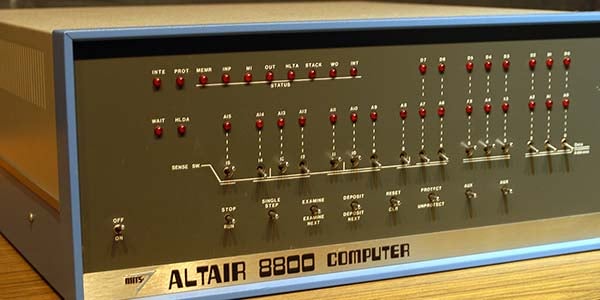
An Altair Clone: Then and Now

AN ALTAIR CLONE: THEN AND NOW
The resources available today compared to what was available in 1977 make all the difference in projects.

When I read the article “Build a Pocket-Sized Altair Computer” by David Hunter on building an Altair clone, I was reminded that I too had designed an Altair clone, but I built mine in 1977. Mine required seven boards in a 19” rack. This article details the resources I had then in a comparison of what resources are available today. I’ll also describe how I designed and built my clone.

Read It Now!

1 GHz PC-Based, Real-Time MSO

Pico Technology
Announcing 750 MHz and 1 GHz model PicoScope 6000E Series pc-based, real-time oscilloscopes from Pico Technology. These top end devices also offer 4 analog channels, 16 digital channels, available FlexRes capabilities, up to 4 GS of capture memory and 21 built-in serial protocol decoder/analyzers plus much more.

Advertisement

Get More Details Here!

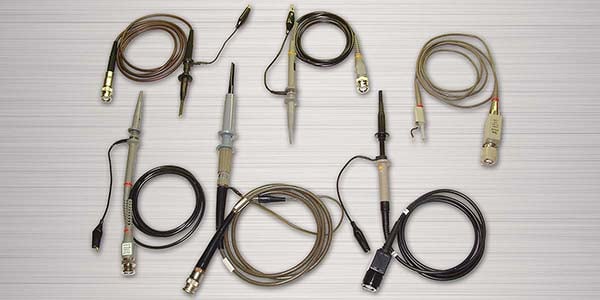
Oscilloscope Probes and Probing

OSCILLOSCOPE PROBES AND PROBING

Do you get erratic results with your oscilloscope?

As you start probing higher and higher frequencies, do the results get increasingly odder? Let’s address the reasons for that strange behavior and construct an Active Probe for about $25.

Read It Now!
Subscribe To Nuts & Volts
Newton’s Apple

NEWTON’S APPLE

A fun spin on the classic falling body experiment to measure the acceleration of gravity.

When I was in junior college, I did an experiment in a physics class that I have never forgotten. It was the classic falling body experiment to measure the acceleration of gravity; 9.81 meters/sec2. I loved carefully adjusting the apparatus and meticulously taking the data, trying to get a result that was as close as possible to the established value. Frankly, I don’t recall how close I got but it was the thrill of scientific inquiry that grabbed me. Now, in this age of computer technology, I thought it might be challenging and fun to see how good I could do in my garage with a fairly simple DIY apparatus.

Read It Now!
Parallax
Build the LASERVox MIDI Laser Theremin

BUILD THE LASERVOX MIDI LASER THEREMIN
Make music by waving your hands at one of the most expressive musical instruments ever built.

If you want an instrument with violin levels of sensitivity, then a regular Theremin is for you. If you want an instrument that’s easier to play and that can control your MIDI synthesizer, then that is precisely what the LASERVox offers. The LASERVox is a perfect project for the novice because it’s a real instrument that can be built very easily with just a handful of components.

Build It Now!
Animatronics Book

Super Awesome Cube Kit

Need soldering experience? This is the kit for you!

Soldering skills are required by industry manufacturing electronic products as well as electronics enthusiasts developing new prototypes. What distinguishes the skilled solderer is the ability to perform work at a level that insures reliability. Here’s a kit that even though it’s electronically simple, it provides the builder with an array of soldering challenges and hours of soldering experience.

Find It in the NV Webstore
Do You Love Robots? - Subscribe To SERVO
Nuts & Volts On CD-ROM
Learning Lab 1
DIY RC Controller
Altaids Computer Kit
You are receiving this email because you have been a subscriber to Nuts & Volts Magazine, or have requested to receive our email newsletters. You may unsubscribe, change your email address or content preferences at any time through the links provided below.
Facebook
Twitter
Nuts & Volts Magazine | 2279 Eagle Glen Pkwy #112-481, Corona, CA 92883
951.371.8497 | editor | www.nutsvolts.com
T & L Publications, Inc, 2279 Eagle Glen Pkwy #112-481, Corona, CA 92883, United States, 951 371-8497

Take the Z80 Challenge, Psychedelia, Build a $6 Desk Mic, NixieStar Clock

Newsletter #226

View in browser
Nuts & Volts - Everythinmg For Electronics
PCBFabExpress
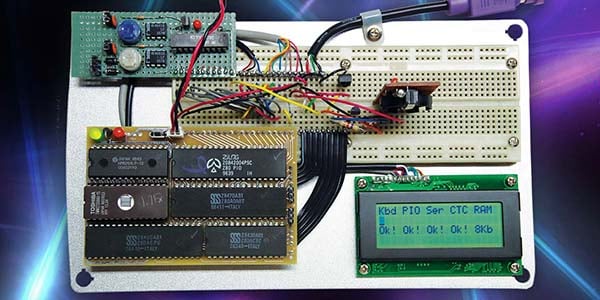
Take the Z80 Challenge

TAKE THE Z80 CHALLENGE
Build something that’s both classic and modern at the same time.

This project started out as a challenge to myself: Could I cram a full-featured Z80 microcomputer using DIP packages onto an ExpressPCB MiniBoard (3.8” by 2.5”)? Here’s what happened.

Take the Challenge Now!
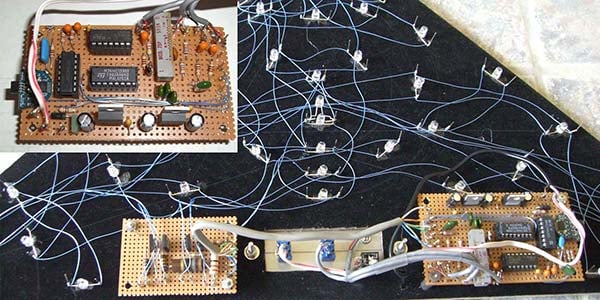
Psychedelia II

PSYCHEDELIA II

Watch lights flashing to your favorite music.

This color organ has both hardware and software (firmware) components. What’s different about this design is that all of the frequency selectivity is provided by digital filters in the digital domain and the output devices are now low voltage super bright LEDs instead of incandescent bulbs. In addition, a digital automatic gain control (or AGC) was included to allow the color organ to adjust itself to varying musical material.

Read It Now!
Subscribe To Nuts & Volts
Build a $6 Desk Mic

BUILD A $6 DESK MIC

Turn a cheap LED lamp into a usable microphone.

I certainly didn’t need another desk mic, but the prospect of building one from a $1 LED lamp and a spare mic cartridge was a project I could not pass up.

Build It Now!
Animatronics Book
Build the NixieStar Clock

BUILD THE NIXIESTAR CLOCK
Construct this elegant and intricate timepiece.

The NixieStar clock is the second timepiece kit I’ve developed. My aim was to have a kit that’s reasonably easy to build with intermediate soldering skills (i.e., minimal SMD components). I also wanted a clock kit that once it was built, any spouse (including my wife!) would accept it on their wall — even with a power cord hanging from it.

Take Time to Build It Now!
Super Awesome Cube Kit

Super Awesome Cube Kit

Need soldering experience? This is the kit for you!

Soldering skills are required by industry manufacturing electronic products as well as electronics enthusiasts developing new prototypes. What distinguishes the skilled solderer is the ability to perform work at a level that insures reliability. Here’s a kit that even though it’s electronically simple, it provides the builder with an array of soldering challenges and hours of soldering experience.

Find It in the NV Webstore

Read More Details
Do You Love Robots? - Subscribe To SERVO
Nuts & Volts On CD-ROM
Learning Lab 1
DIY RC Controller
Altaids Computer Kit
You are receiving this email because you have been a subscriber to Nuts & Volts Magazine, or have requested to receive our email newsletters. You may unsubscribe, change your email address or content preferences at any time through the links provided below.
Facebook
Twitter
Nuts & Volts Magazine | 2279 Eagle Glen Pkwy #112-481, Corona, CA 92883
951.371.8497 | editor | www.nutsvolts.com
T & L Publications, Inc, 2279 Eagle Glen Pkwy #112-481, Corona, CA 92883, United States, 951 371-8497