Amateur Radio Weekly Newsletter – Week of September 4, 2021

Amateur Radio Weekly Newsletter

Ham radio news, commentary, giveaways, and more!
Celebrating 25 years of service – 1995-2021
Over 8,000 subscribers!
Unsubscribe

Saturday, September 4, 2021

  • The Secret Storm Approaching CW Contesting…
    As a small child, my grandmother and mother both watched several “soap operas,” including the Secret Storm. The opening of Secret Storm showed violent waves crashing on the shoals, something I’d never seen being raised in Middle Georgia. My grandmother especially used to flinch and react to the plot-line drama there, something that I took […]
  • Ham College 80
    Ham College episode 80 is now available for download. Extra Class Exam Questions – Part 18. E4D Receiver performance characteristics: blocking dynamic range, intermodulation and cross-modulation interference, third-order intercept, desensitizati…
  • ICQ Podcast Episode 358 – Grand Field Day
    In this episode, Martin Butler (M1MRB) is joined by Chris Howard (M0TCH), Frank Howell (K4FMH), Bill Barnes (WC3B) and Caryn Eve Murray KD2GUT to discuss the latest Amateur / Ham Radio news. Colin (M6BOY) rounds up the news in brief and in the episode …
  • LHS Episode #426: The Weekender LXXVII
    It’s time once again for The Weekender. This is our bi-weekly departure into the world of amateur radio contests, open source conventions, special events, listener challenges, hedonism and just plain …

Thank you for being an AmateurRadio.com reader and subscriber to the Amateur Radio Newsletter.

Do you like to write? Please consider submitting an article.

Matt W1MST
Managing Editor
editor

Twitter / Facebook

How to set up your own ham radio blogGet started in less than 15 minutes

AmateurRadio.com
P.O. Box 45
Hampden ME 04444
USA

Replacing the 555 with a PIC, Synchronizing a 60 Hz Xtal Controlled Oscillator, Waves and Propagation Part 2, Metal Detector

Newsletter #238

View in browser
Nuts & Volts - Everythinmg For Electronics
Madgetech
Pololu
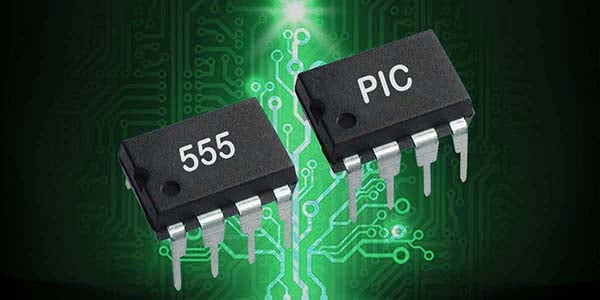
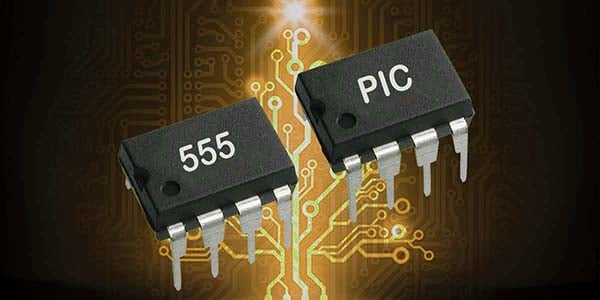
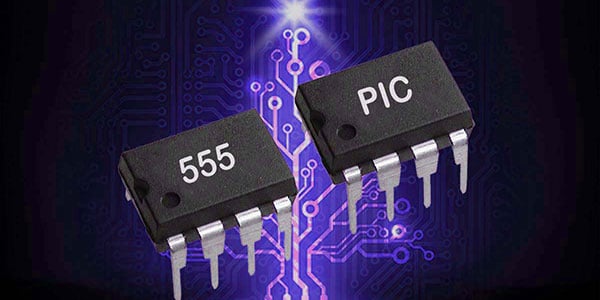
Replacing The 555 With A PIC — Part 4 — A Digital Analog

REPLACING THE 555 WITH A PIC — PART 4 — A DIGITAL ANALOG
This fourth article discusses the more complex circuits from the book, 555 Timer IC Circuits by Forrest Mims.

Some will use the PIC replacement from Part 1, while others will develop specific programs using a PIC to emulate a particular implementation of a 555.

Read It Now!

Get an Arduino Based Online Course FREE With This Kit!

DrDuino Boot Camp
Arduino users worldwide agree that Dr.Duino kits are the easiest way to learn and design Arduino projects. Kits include sensors and displays and have been featured in magazines like Design News and Nuts & Volts, Make Magazine and more. For a limited time get Dr.Duino’s Arduino boot camp with purchase!

Click Here To Learn More!

Advertisement

ServoCity
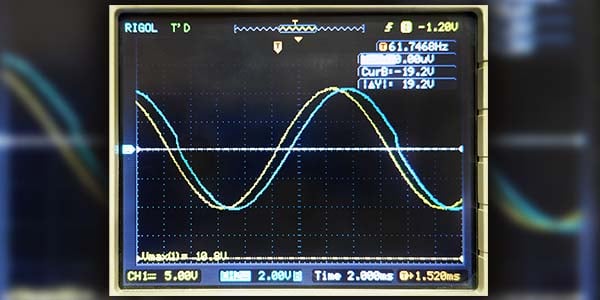
Synchronizing a 60 Hz Crystal Controlled Oscillator to the Line

SYNCHRONIZING A 60 Hz CRYSTAL CONTROLLER OSCILLATOR TO THE LINE

Synchronization of digital systems to the 60 Hz line has some surprisingly interesting challenges.

Though the science of synchronizing one analog signal to other analog signal is somewhat well-trod ground, the introduction of digital systems created surprisingly interesting challenges for synchronization. Here is just one of many possible ways to solve this particular problem.

Read It Now!
Technologic Systems
ME Labs
Waves and Propagation: Part 2 — Radio Horizon

WAVES AND PROPAGATION: PART 2 — RADIO HORIZON
Not only hams can take advantage of radio propagation — everybody has a chance to experience some very interesting ways of interacting with the natural world through wireless.

In Part 1, we covered a batch of basics on waves and propagation: definitions of terms, and some fundamentals of how waves travel about. Not only hams can take advantage of radio propagation — everybody has a chance to experience some very interesting ways of interacting with the natural world through wireless. Let’s put that know-how to work!

Read It Now!
Subscribe To Nuts & Volts
PCBWay
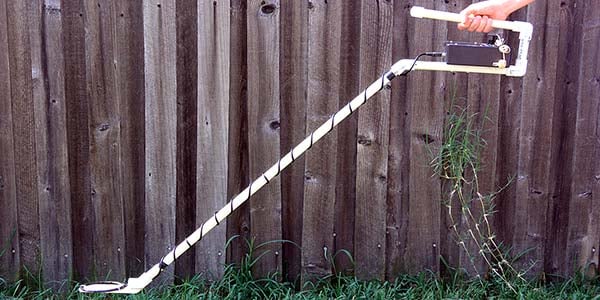
Build A Four Transistor Metal Detector

BUILD A FOUR TRANSISTOR METAL DETECTOR
For a bold and eye-catching output display in your next electronic Want to be a treasure hunter?

By discerning subtle changes in frequency, this design is capable of detecting coins to a depth of three to four inches. The circuit can sense a soda can at a depth of six inches and metal pipes at an even greater distance.

Build It Now!
Buy It Now! Updated DIY RC Controller Kit with Receiver Recorder
Random Number Kit
Learning Lab
Nuts & Volts On CD-ROM
RetroGame Kit
Do You Love Robots? - Subscribe To SERVO
You are receiving this email because you have been a subscriber to Nuts & Volts Magazine, or have requested to receive our email newsletters. You may unsubscribe, change your email address or content preferences at any time through the links provided below.
Facebook
Twitter
Nuts & Volts Magazine | 2279 Eagle Glen Pkwy #112-481, Corona, CA 92883
951.371.8497 | editor | www.nutsvolts.com
T & L Publications, Inc, 2279 Eagle Glen Pkwy #112-481, Corona, CA 92883, 951 371-8497

Amateur Radio Weekly Newsletter – Week of August 28, 2021

Amateur Radio Weekly Newsletter

Ham radio news, commentary, giveaways, and more!
Celebrating 25 years of service – 1995-2021
Over 8,000 subscribers!
Unsubscribe

Saturday, August 28, 2021

Thank you for being an AmateurRadio.com reader and subscriber to the Amateur Radio Newsletter.

Do you like to write? Please consider submitting an article.

Matt W1MST
Managing Editor
editor

Twitter / Facebook

How to set up your own ham radio blogGet started in less than 15 minutes

AmateurRadio.com
P.O. Box 45
Hampden ME 04444
USA

Replacing the 555 with a PIC, The Story of the Transistor, Waves and Propagation, Getting Started with Matrix LED Displays

Newsletter #237

View in browser
Nuts & Volts - Everythinmg For Electronics
Nuts-siglent-ad2-animation
Replacing The 555 With A PIC — Part 3 — A Digital Analog

REPLACING THE 555 WITH A PIC — PART 3 — A DIGITAL ANALOG
This third article discusses the less complex audio oscillator circuits from 555 Timer IC Circuits by Forrest Mims.

More experiments using PIC processors in the typical role of a 555 timer! This third article in a recurring series examines several of the circuits from 555 Timer IC Circuits by Forrest Mims, which are simple astable multivibrators.

Read It Now!

Unleash your inner maker with this fun Arduino Based Boot Camp!

DrDuino Electronics Boot Camp
Beginning with what is an Arduino & how it works and finishing off with making your own MORSE CODE MACHINE! If you have always wanted to get into Arduino, this is for you!

Click Here To Learn More!

Advertisement

Buy It Now! Updated DIY RC Controller Kit with Receiver Recorder
The Story of the Transistor

THE STORY OF THE TRANSISTOR

A journey through the history that led to the most important invention of the 20th century.

Life would not be the same without the transistor, which was invented just over seven decades ago. It is considered by researchers and historians to be the most important invention of the 20th century, leading to groundbreaking advances in computing, communications, medicine, and practically every technically related field. In this article, we’ll examine the contributions of the personalities and organizations involved, as well as the impetus that led to this landmark invention.

Read It Now!
Autonomous Capabilities for DoD
Waves and Propagation: Part 1

WAVES AND PROPAGATION: PART 1
Radio and wireless are all about waves and how they link distant points together. Learn about RF propagation, which is the way radio signals get from Point A to Point B.

One key element of ham radio is propagation — the way radio signals get from Point A to Point B. Lots of projects involve wireless links, so it behooves the builder to have a bit of an idea about how propagation works. After all, with so many choices available, you need information to understand your requirements for choosing the right technology and installing it properly. We’ll start with some basics of radio waves, then get them bouncing around.

Read It Now!
Subscribe To Nuts & Volts
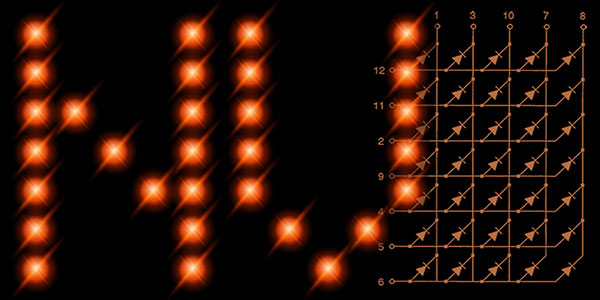
Getting Started With Matrix LED Displays

GETTING STARTED WITH MATRIX LED DISPLAYS
For a bold and eye-catching output display in your next electronic masterpiece, consider exploiting a matrix LED device.

You’ll be able to create just about any symbol or pattern you want, and can even animate things for some action-packed results.

Read It Now!
Random Number Kit
Learning Lab
Nuts & Volts On CD-ROM
RetroGame Kit
Do You Love Robots? - Subscribe To SERVO
You are receiving this email because you have been a subscriber to Nuts & Volts Magazine, or have requested to receive our email newsletters. You may unsubscribe, change your email address or content preferences at any time through the links provided below.
Facebook
Twitter
Nuts & Volts Magazine | 2279 Eagle Glen Pkwy #112-481, Corona, CA 92883
951.371.8497 | editor | www.nutsvolts.com
T & L Publications, Inc, 2279 Eagle Glen Pkwy #112-481, Corona, CA 92883, 951 371-8497

Amateur Radio Weekly Newsletter – Week of August 21, 2021

Amateur Radio Weekly Newsletter

Ham radio news, commentary, giveaways, and more!
Celebrating 25 years of service – 1995-2021
Over 8,000 subscribers!
Unsubscribe

Saturday, August 21, 2021

  • ICQ Podcast Episode 357 – Questions, Answers and Tips
    In this episode, Colin Butler (M6BOY) is joined by Leslie Butterfield G0CIB, Edmund Spicer M0MNG and Martin Butler (M1MRB) to discuss the latest Amateur / Ham Radio news. Colin (M6BOY) rounds up the news in brief and in the episode, we feature Question…
  • Back from vacation and back to my RFI……well kinda?
    We are back from vacation and it was a last minute road trip decision which when you are retired you can do. We went back to Ontario to visit family and friends and again because we are retired we decided to stay longer than planned. The original…
  • LHS Episode #425: Crunch ‘n Munch
    Hello and welcome to the 425th installment of Linux in the Ham Shack. In this short topics episode, the hosts discuss internal policing of the amateur radio airwaves, NASA grants …

Thank you for being an AmateurRadio.com reader and subscriber to the Amateur Radio Newsletter.

Do you like to write? Please consider submitting an article.

Matt W1MST
Managing Editor
editor

Twitter / Facebook

How to set up your own ham radio blogGet started in less than 15 minutes

AmateurRadio.com
P.O. Box 45
Hampden ME 04444
USA

Ways to Generate a Sine Wave, Replacing the 555 with a PIC, Universal Relay Board, Wire Wrap is Alive and Well!

Newsletter #236

View in browser
Nuts & Volts - Everythinmg For Electronics
ExpressPCB
Seven Common Ways to Generate a Sine Wave

SEVEN COMMON WAYS TO GENERATE A SINE WAVE

There are literally dozens of ways to generate a sine wave. Here are some of the more popular methods you should be familiar with.

The sine wave is a naturally occurring signal shape in communications and other electronic applications. Many electronic products use signals of the sine wave form. Audio, radio, and power equipment usually generates or processes sine waves.

Read It Now!
A Mid-Level Scope for High-Level Productivity
Pico Technology
PicoScope 3000 Series PC oscilloscopes aren’t just lightweight and compact, they’re also engineered for productivity. With 2 or 4 analog channels, 16 digital channels (MSOs), 6 instruments-in-one functionality, good speed and deep memory, they offer high-quality signal measurement and high-volume task efficiency.

Get More Details Here!

Advertisement

Replacing The 555 With A PIC — Part 2 — A Digital Analog

REPLACING THE 555 WITH A PIC — PART 2: A DIGITAL ANALOG

This second article examines several of the circuits from 555 Timer IC Circuits by Forrest Mims, that are used basically as a monostable multivibrator.

Inspired by Forrest Mims and his Mini-Notebook series, we are detailing the emulation of a 555 or 556 using a PIC in several different circuits in our own set of articles. In this installment, we’ll review the specific circuits which use the 555 as a simple one-shot and discuss the PIC replacement for the same applications.

Read It Now!

These kits are great for soldering practice!

Random Number Generator Kit
Morse Code Generator Kit
Nuts siglent ad v1
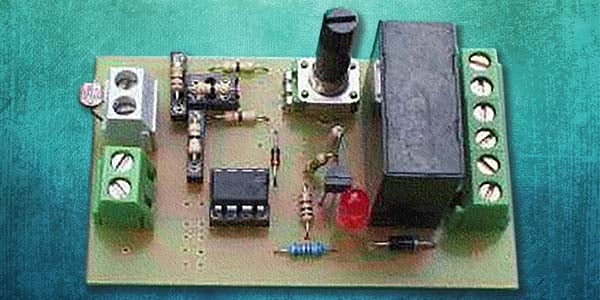
Universal Relay Board

UNIVERSAL RELAY BOARD

This universal relay board will allow you to drive a 12V DPDT relay using heat, cold, light, dark, sound, logic-level voltages, and just about any varying resistive output sensor you can think of.

In fact, you can use it to switch the relay ON or OFF using any voltage between zero to 12V DC or any sensor that has a varying output in this range. This is the ultimate relay board.

Build It Now!
Subscribe To Nuts & Volts
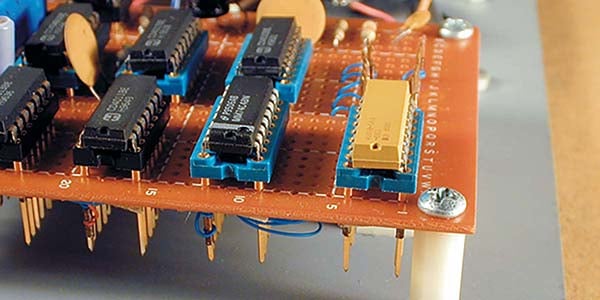
Wire Wrap Is alive And Well!

WIRE WRAP IS ALIVE AND WELL!
Here’s a different option from PCB fabrication.

Construction articles found in electronics magazines use printed circuit boards for all but the simplest circuits, so investing time and money into the PCB fabrication process seems to be the next logical step, albeit a bit daunting for the new hobbyist. PCB fabrication is not necessarily the next step.

There is another alternative … wire wrap.

Read It Now!
Nuts & Volts On CD-ROM
Updated RC Controller
Do You Love Robots? - Subscribe To SERVO
You are receiving this email because you have been a subscriber to Nuts & Volts Magazine, or have requested to receive our email newsletters. You may unsubscribe, change your email address or content preferences at any time through the links provided below.
Facebook
Twitter
Nuts & Volts Magazine | 2279 Eagle Glen Pkwy #112-481, Corona, CA 92883
951.371.8497 | editor | www.nutsvolts.com
T & L Publications, Inc, 2279 Eagle Glen Pkwy #112-481, Corona, CA 92883, 951 371-8497

Amateur Radio Weekly Newsletter – Week of August 14, 2021

Amateur Radio Weekly Newsletter

Ham radio news, commentary, giveaways, and more!
Celebrating 25 years of service – 1995-2021
Over 8,000 subscribers!
Unsubscribe

Saturday, August 14, 2021

  • Take This Command and Shove It…
    While he may have been channeling his inner Nashville self, those are the exact words KJ4VU used to describe his tool to facilitate use of the Elgato Streak Deck in your ham shack. Telling attendees at last Saturday’s Cycle 25 Tribe Zoom meeting about his macro.exe software tool, George KJ4VU aptly described the engineering design […]
  • This jig is up. In fact, it’s about to be put to the test…
    We hams often resort to the common claim to choke the “life” out of RFI on feed-lines or other wire carrying electrical current in our shack environment (and nearby) by using ferrite materials in various forms. So it’s just a reflex action to buy those ferrites to install or to make chokes. Wind-em tight. A […]
  • Loop On Ground (LOG) Tests At VA7ST
    Single LOG / Dual LOG – courtesy: va7st.ca As man-made noise levels become ever more problematic for radio amateurs, particularly those that are serious about weak-signal DX on the lower bands (160 / 80m), the ‘Loop On Ground’ or ‘LOG’ is provin…
  • LHS Episode #424: The Weekender LXXVI
    It’s time once again for The Weekender. This is our bi-weekly departure into the world of amateur radio contests, open source conventions, special events, listener challenges, hedonism and just plain …

Thank you for being an AmateurRadio.com reader and subscriber to the Amateur Radio Newsletter.

Do you like to write? Please consider submitting an article.

Matt W1MST
Managing Editor
editor

Twitter / Facebook

How to set up your own ham radio blogGet started in less than 15 minutes

AmateurRadio.com
P.O. Box 45
Hampden ME 04444
USA
Replacing the 555 with a PIC, Lunch Box Jukebox, Gilbert Erector Set Magic, Transistor Clock

Newsletter #235

View in browser
Nuts & Volts - Everythinmg For Electronics
Nuts-siglent-ad2-animation
Replacing The 555 With A PIC — Part 1 — A Digital Analog

REPLACING THE 555 WITH A PIC — PART 1 — A DIGITAL ANALOG
Learn how to emulate a 555 or 556 using a PIC microcontroller — with no special programming required!

Inspired by Forrest Mims and his Mini-Notebook series, we’ll detail the emulation of a 555 or 556 using a PIC in several different circuits. The particular implementation this time covers both monostable and astable modes, and the PIC does not have to be reprogrammed in any way.

Read It Now!

Unleash your inner maker with this fun Arduino Based Boot Camp!

DrDuino Electronics Boot Camp
Beginning with what is an Arduino & how it works and finishing off with making your own MORSE CODE MACHINE! If you have always wanted to get into Arduino, this is for you!

Click Here To Learn More!

Advertisement

Buy It Now! Updated DIY RC Controller Kit with Receiver Recorder
AUVSI XPONENTIAL
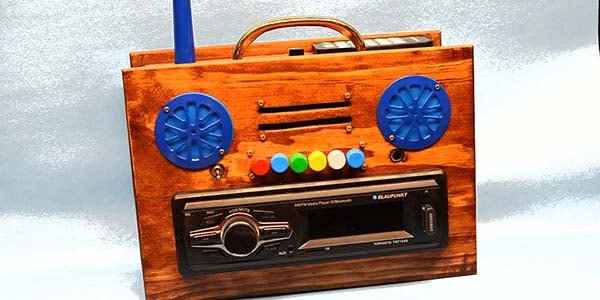
Build a Lunch Box Jukebox

BUILD A LUNCH BOX JUKEBOX

Take your fun with you in an all-in-one entertainment system you build yourself.

The Lunch Box Jukebox is a compilation of various projects to make a compact portable music, video, and game entertainment device with the Raspberry Pi Zero at the heart of the Jukebox Internet radio.

Build It Now!
Autonomous Capabilities for DoD
The Magic of the Gilbert Erector Set

THE MAGIC OF THE GILBERT ERECTOR SET
Update a classic Erector Set Ferris Wheel with an Arduino.

Erector sets helped to spark lifetime passions for building things. Take a trip down memory lane and follow the construction of a classic 1950’s Gilbert Erector set Ferris wheel with some new bells and whistles added from today’s technology.

Read It Now!
Subscribe To Nuts & Volts
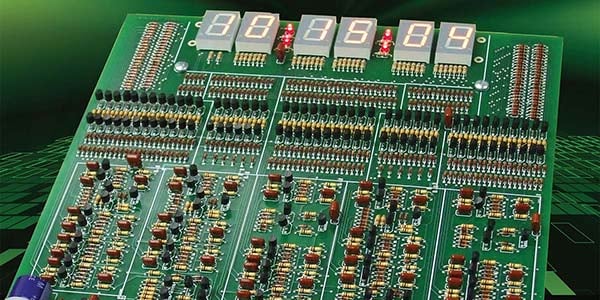
Transistor Clock

TRANSISTOR CLOCK
Build a digital clock using only transistors as the active elements. The final parts count is 194 transistors, 566 diodes, 400 resistors, and 87 capacitors.

This clock is made of a collection of counters. Counters made by a chain of n flip-flops result in binary ripple counters capable of dividing by 2n. A four flip-flop counter naturally counts from 0 to 15. To make it count from 0 to 9, it needs some steering logic on the flip-flop toggle inputs.

Build It Now!
NEW! Random Number Generator Kit
NEW! Morse Code Generator Kit
Nuts & Volts On CD-ROM
Altaids Computer Kit
Do You Love Robots? - Subscribe To SERVO
You are receiving this email because you have been a subscriber to Nuts & Volts Magazine, or have requested to receive our email newsletters. You may unsubscribe, change your email address or content preferences at any time through the links provided below.
Facebook
Twitter
Nuts & Volts Magazine | 2279 Eagle Glen Pkwy #112-481, Corona, CA 92883
951.371.8497 | editor | www.nutsvolts.com
T & L Publications, Inc, 2279 Eagle Glen Pkwy #112-481, Corona, CA 92883, 951 371-8497

of Podcast

Amateur Radio Weekly Newsletter

Ham radio news, commentary, giveaways, and more!
Celebrating 25 years of service – 1995-2021
Over 8,000 subscribers!
Unsubscribe

Saturday, August 7, 2021

  • Ham College 79
    Ham College episode 79 is now available for download. Extra Class Exam Questions – Part 17. E4C Receiver performance characteristics: phase noise, noise floor, image rejection, MDS, signal-to-noise ratio, noise figure, reciprocal mixing, selecti…
  • ICQ Podcast Episode 356 – QSO Today Summer Expo
    In this episode, Martin (M1MRB) is joined by Chris Howard (M0TCH), Martin Rothwell (M0SGL), Ed Durrant (DD5LP), Frank Howell (K4FMH) and Bill Barnes (WC3B) to discuss the latest Amateur / Ham Radio news. Colin (M6BOY) rounds up the news in brief and in…
  • LHS Episode #423:
    Hello and welcome to the 423rd episode of Linux in the Ham Shack. In this short-topics episode, the hosts discuss the upcoming third QSO Today Virtual Ham Expo along with …
  • Interested in Amateur Radio Digital Mode FT8 Operations?
    A VISUAL + AUDIO AIR CHECK OF DIGITAL MODE FT8 QSOs, ON THE 30-METER BAND Here is a video capture of the reception and transmission of many digital FT8-mode amateur radio high-frequency (HF; Shortwave) communication signals. This video is a front-seat view of the software operation performed at the radio room of amateur radio operator, […]
  • Button, Button. Who’s Got the Button? George KJ6VU Does. And So Can You!
    Managing your ham radio station has become increasingly complex, to say the least. We have more complex transceivers with so many features that Computer Aided Transceivers (CAT) are the norm in many circles. With this, both computer-based logging of QSOs with CAT control makes a PC de rigueur for many, many hams. But therein lies […]

Thank you for being an AmateurRadio.com reader and subscriber to the Amateur Radio Newsletter.

Do you like to write? Please consider submitting an article.

Matt W1MST
Managing Editor
editor

Twitter / Facebook

How to set up your own ham radio blogGet started in less than 15 minutes

AmateurRadio.com
P.O. Box 45
Hampden ME 04444
USA

Updating a Programming System, Audio Distortion Analyzer, The Importance of Knowing the Basics, Super-Secret Burglar Alarm

Newsletter #234

View in browser
Nuts & Volts - Everythinmg For Electronics
Nuts-siglent-ad2-animation
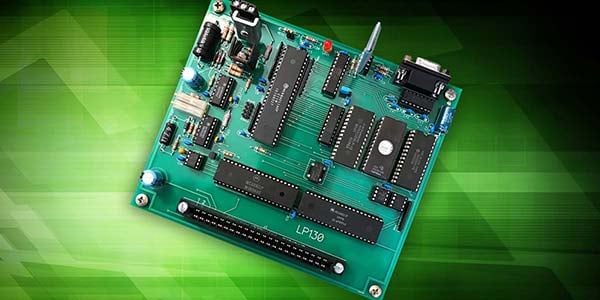
Updating a General-purpose Programming System

UPDATING A GENERAL-PURPOSE PROGRAMMING SYSTEM

It was clearly time for an update to my LP120 that I originally built 20 years ago.

Twenty years ago, I published an article in Nuts & Volts about designing a general-purpose programming system: the LP120. I’ve used the LP120 heavily for the last 20 years to support my eight-bit design hobby. It now has uploadable drivers and programming modules for many eight-bit micros, EPROMs, and GALs. However, things have changed since 2000. Back then, few microcontrollers had more than 4K bytes of program memory. Now, eight-bit PICs have up to 64K words of memory. Clearly an update to the LP120 was called for.

Read It Now!
AUVSI XPONENTIAL
MDSETE
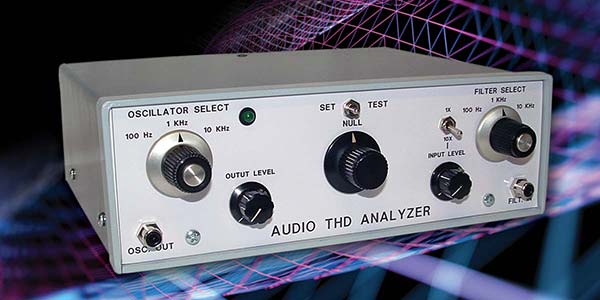
Build a Basic Audio Distortion Analyzer

BUILD A BASIC AUDIO DISTORTION ANALYZER

Construct a THD (Total Harmonic Distortion) analyzer that’s easy on the wallet.

Over the years with different companies I’ve worked for, I always had access to high-end audio THD analyzers. I found these very useful for design work, debugging, and repair of audio equipment. My present company has no need for them and consequently they aren’t included in their armory of test equipment. Oftentimes, I have need for one but could never afford to own one — not even a used one. I thought this would be a worthwhile project, so this article describes how to construct one.

Build It Now!
Autonomous Capabilities for DoD
The Importance of Knowing the Basics

THE IMPORTANCE OF KNOWING THE BASICS
Basic electronics knowledge is the foundation to higher understanding.

From voltage dividers to transfer functions on op-amps, why basic electronics knowledge is the foundation to higher understanding.

Read It Now!
Subscribe To Nuts & Volts
Updated DIY RC Controller Kit now with Receiver Recorder
Build a Super-Secret Invisible Burglar Alarm

BUILD A SUPER-SECRET INVISIBLE BURGLAR ALARM
Keep valuables safe and expose kids to technology at the same time.

One educational trend is an increased emphasis on STEM education aims to expose children and young adults to the world of technology with the hope they will become the next generation of much needed scientists, engineers, and mathematicians. As with all educational initiatives, the success rates are greatly amplified with the addition of an at-home educational component. This project gives one example of how to do this.

Build It Now!
NEW! Random Number Generator Kit
NEW! Morse Code Generator Kit
Nuts & Volts On CD-ROM
Altaids Computer Kit
Do You Love Robots? - Subscribe To SERVO
You are receiving this email because you have been a subscriber to Nuts & Volts Magazine, or have requested to receive our email newsletters. You may unsubscribe, change your email address or content preferences at any time through the links provided below.
Facebook
Twitter
Nuts & Volts Magazine | 2279 Eagle Glen Pkwy #112-481, Corona, CA 92883
951.371.8497 | editor | www.nutsvolts.com
T & L Publications, Inc, 2279 Eagle Glen Pkwy #112-481, Corona, CA 92883, 951 371-8497