So you think you know?

Recently someone asked about installing a 50Watt radio in an RV and would the cigarette lighter plug be enough?  I would guess after 40 some years of ham radio I should of known better than to immediately insert foot in mouth and answer. 

This is what I responded with:

Use what you know from study first.  50 watts divided by 12 volts = 4.2 amps (+/-) add 1 amp for normal receive, misc loss, etc and you have 5.2 amps required on full key down, you won’t be key down for more than 3 minutes (normal time-out timers), so it should be ok..

Next find the fuse box and see what fuse is used for the cig lighter plug – normally I find they are 10 amps , maybe more.

That indicated the cig lighter plug would handle a 5 amp load with out much issue. 

Your situation may be different

All that said, I use the cig lighter for a lot of stuff since mine have 10 amp fuses in them. some may ever have up to 15 or 20 amp fuses, but pays to check first.  I do try to find a way to get direct power to the battery with ground as well but sometimes you just can’t or it is too much hassle to get to it.  I like to have my radios on a separate circuit fuse if not direct to battery so in my motorhome I have them wired to the fuse box, use an open slot and put in a 15 amp fuse (I have a IC7100 and at 100 watts I use twice the power. ) although each leg of the power to the radio also has a fuse in it.  Safer is better.

It was only partially correct and not at all accurate for the actual case.  The actual case here should have been to look up what the radio requires, not just do a simple power formula. In reality the radio requires 10 amps on TX full power not the 4.2.  Why? because it takes more power to create that 50 watts out than just the simple power formula says. 

Next checking the fuses was totally correct in that cars today have anything from 5 amp to 20 amp fuses on the cigarette lighter line and all that is based on how the manufacturer wired it up so the fuse may be set due to limits of wire and length and other things.  

Thank goodness that the email was sent to the club email address and we have several way more knowledgeable Electronic engineers and instructors than myself and they corrected my miss-calc method.   Bob, K0NR, went on to link in a post by K0BG that covers this topic in some extensive details.   Who knew that new vehicles now have things like BMS, EIS and ELD’s.  (Battery monitoring systems (BMS) are now a universal subsystem in every modern vehicle, due in part to the fed-mandated Engine Idle Shutdown (EIS). Also the load current is measured with an Electrical Load Detector (ELD).  Yes, look those up.

I must say that I have been “hacking” my way through mobile operation for over 40 years according to some of this info.  In my defense – it works.   That said, I am going to go back and try to update some of my wiring.  I have already done that on my Jeep with direct to battery runs and the addition of my home made timed cut in/out control (it uses a relay so it is not great but not $250 in cost either).   I built 3 of them from an ARRL article back in 2012.  

So going mobile? read up, check the fuses, make sure you can handle the load and wire it up the best way possible.

WD0AJG


Pictures or it didn’t happen!

Friday I got an email from Eric – W0RLY that he was headed to Castlewood Canyon to do a quick POTA.  Not being too busy myself I jumped in the jeep and drove up to check this out.  It was a great day (early) and it was fun meeting up with Eric and mostly watching him do his thing.  Not being a CW op I was not able to capture all that went on but did get a few of the calls and a little of the confirmations.  Thanks Eric for letting me know. I sure need to put more time in on “relearning” CW.  I learned it well enough to pass my tests back in 1977 but promptly forgot most of what I had shortly after that.  I am studying, slowly and hope to be using it again.  A fun mode that just works.

1-NIK_4497

throw a line over a tall tree and pull up a small end-fed.

1-NIK_4500

There in there but sometimes you have to listen hard!  I couldn’t hear it due to hearing aids, wind, other noise, etc.  He finally put on the earbuds in his left hand and he moved much faster then.

1-NIK_4503

paper log, write it as fast as you can and then hit the key.  He said he prefers his straight key but did have the paddles on the KX3 that he used some.  Now from my listening the paddles send cleaner code but am sure that is the radio doing that and the straight key seemed to run a few things together, but what do I know I can’t even copy half to 2/3 of the letters and at his speed I was lucky to capture the CQ the POTA and his call…ha!

So , I guess this is another project for me to work on… fun to get out to the parks, make a few and breath fresh air…

WD0AJG
Hearing Aids and Ham Radio

UPDATE: 05-30-2021

Well I have tested the Phonak aids.  They link direct to my phone and work good (now that I have the proper molds on them and reset).  They also, I find, work well with my Anytone 878.  However they do not link up to either my FT3DR or my TM74D?  I tried multiple times and they just won’t link up as both radios require more than I can supply from the aids.  That said, I use my Anytone most of the time and if I decide to go out with the FT3 or TH-D74 I just pull out the old Resound aids and go. 

I also must say the Resound unite clip works better at distance than the phonak BT.  likely due to size, antenna, and power? not sure. 

I like the combo of the Anytone 878 and the external BT PTT button since I link up the BT and hear fine and put the BT PTT on the steering wheel or carry it snapped on my backpack straps or ? and have access to the PTT easy.  With the other setup I either have to key the radio by PTT on the radio or use the clip and it requires a push to key and then a push to unkey. 

The hassles of the hearing impaired…


WD0AJG


I guess I had tested this some time ago but have re-established the links. Let me explain. I have been wearing hearing aids for many years. I have severe loss and require them to just cope with things in the real world (as opposed to my “own little world” when I do not wear them. There is a positive side… if I don’t want to hear stuff I just take them out.

Back in August I determined that I needed new aids. My old set was approaching 8 years old and were not as efficient as they once were so I searched and found a new set that work dirrect with my phone via blue tooth. The old set (Resound) worked bluetooth but they required an external connecting device. it is called Unite device.


It occurred to me in various testing that it should work as well with the handheld radios I have that have bluetooth as the phone.  It was not hard to pair and yes it does work on both my FT3D and TM74D handhelds with built in bluetooth .  My new hearing aids I have not tested or tried to link up since they work direct I doubt they will work as well as the unite clip but I may tackle that link sometime in the future.  too bad bluetooth can’t link up two devices (phone and radio)…


WD0AJG

Floating Point Math without Hardware, Arduino Graphics Interface Part 2, SMT Boards at Home, Analog-Style LED Clock

Newsletter #224

View in browser
Nuts & Volts - Everythinmg For Electronics
PCBFabExpress
Floating Point Multiplication and Division Without Hardware Support

FLOATING POINT MULTIPLICATION AND DIVISION WITHOUT HARDWARE SUPPORT

Using Horner’s method to provide floating point support on microprocessors or microcontrollers that don’t have support built in.

To use the digital filters necessary for a color organ project, I needed to be able to multiply floating point numbers on a microcontroller that doesn’t even know how to multiply integers. Horner’s Method to the rescue!

Read It Now!
1 GHz PC-Based, Real-Time MSO
Pico Technology
Announcing 750 MHz and 1 GHz model PicoScope 6000E Series PC-based, real-time oscilloscopes from Pico Technology. These top end devices also offer 4 analog channels, 16 digital channels, available FlexRes capabilities, up to 4 GS of capture memory and 21 built-in serial protocol decoder/analyzers plus much more.

Get More Details Here!

Advertisement

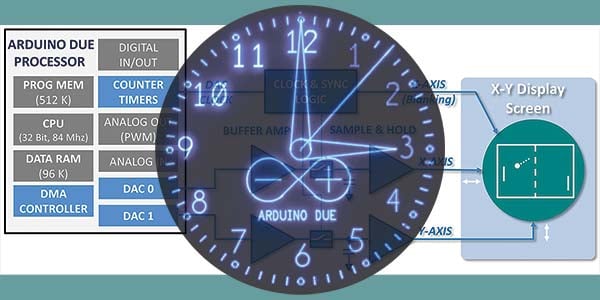
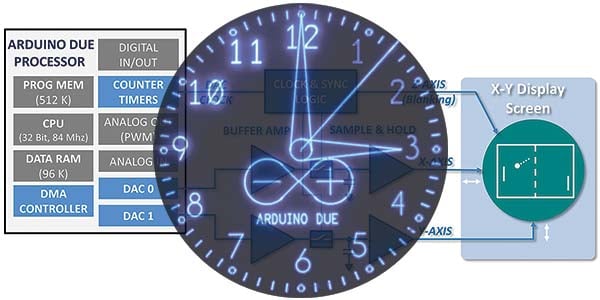
The Arduino Graphics Interface — Part 2

THE ARDUINO GRAPHICS INTERFACE

Part 2 — Software Concepts and Support Library.

In Part 1, we described the background and hardware build of the Arduino Graphics Interface (AGI). With this platform, you can turn an analog oscilloscope into a very high resolution graphics display device. This time, we’ll complete the project by describing the details of the XYscope: the software libraries and sample code that make the AGI hardware easy to use and integrate into any graphics display application.

Read It Now!
ExpressPCB
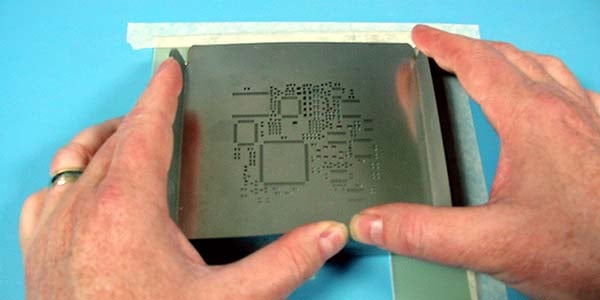
Screen Print and Reflow SMT Boards at Home

SCREEN PRINT AND REFLOW SMT BOARDS AT HOME
Enjoy SMD capabilities using the at-home procedure outlined here.

Soldering the tighter pitch on surface-mount devices can be a problem for a home workshop. Would you like to take advantage of SMD capabilities? The following method I’m going to take you through is far from the sophistication of major screen printing and reflow equipment, but it gets the job done — even double-sided SMT boards. Plus, You can do it right in your garage or workshop.

Read It Now!
Subscribe To Nuts & Volts
Build an Analog-Style LED Clock — Part 1

BUILD AN ANALOG-STYLE LED CLOCK — PART 1
This circuit uses Charlieplexing to individually control 182 LEDs with only 14 I/O lines and to read four pushbuttons by connecting them to the LED matrix with a handful of other discrete components.

Driving LEDs using the lowest possible pin-count is a common challenge for folks creating projects with microcontrollers. Complementary LED drive, also known as “Charlieplexing,” allows a large number of LEDs to be controlled with a relatively small number of I/O pins. This fun digital LED clock project is a hands-on example of how Charlieplexing can be used to stretch your “pin budget!”

Build It Now!
Animatronics Book
Do You Love Robots? - Subscribe To SERVO
Nuts & Volts On CD-ROM
NixieStar Clock Kit
DIY RC Controller
Altaids Computer Kit
You are receiving this email because you have been a subscriber to Nuts & Volts Magazine, or have requested to receive our email newsletters. You may unsubscribe, change your email address or content preferences at any time through the links provided below.
Facebook
Twitter
Nuts & Volts Magazine | 2279 Eagle Glen Pkwy #112-481, Corona, CA 92883
951.371.8497 | editor | www.nutsvolts.com
T & L Publications, Inc, 2279 Eagle Glen Pkwy #112-481, Corona, CA 92883, United States, 951 371-8497

Intercept Secret Spy Messages, Lab Power Supply, Arduino Graphics Interface, Urban Hams

Newsletter #223

View in browser
Nuts & Volts - Everythinmg For Electronics
PCBFabExpress
How You Can Intercept Secret Messages Being Sent to Spies

HOW YOU CAN INTERCEPT SECRET MESSAGES BEING SENT TO SPIES
Unidentified radio broadcasts have been transmitting coded messages using numbers for years.

Believe it or not, there are powerful radio stations all over the world sending out messages to spies every day, and you can hear them with an inexpensive shortwave radio and a simple antenna. You probably won’t be able to decode them, but it’s a real kick to tune in these clandestine signals.

Read It Now!
Subscribe To Nuts & Volts
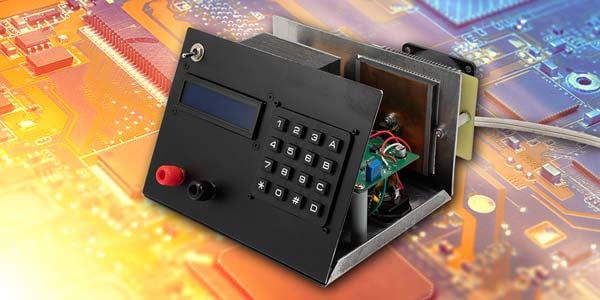
High Voltage Op-amps, a Current Sensor, and a 32-bit Microcontroller: How About a Lab Power Supply?

HIGH VOLTAGE OP-AMPS, A CURRENT SENSOR, AND A 32-BIT MICROCONTROLLER: HOW ABOUT A LAB POWER SUPPLY?

This article will show you all the steps needed to design a programmable supply.

In most linear power supplies, voltage and current limits are entered with rotating knobs. For faster and higher precision, I wanted to design a lab power supply for my bench with voltage and current limits entered via a keypad. I included a microcontroller to take care of the keypad input functions but wanted the basic supply to be linear — no switching and less noise! Here’s how I did it.

Read It Now!
Animatronics Book
The Arduino Graphics Interface — Part 1

THE ARDUINO GRAPHICS INTERFACE
Part 1 — Design Concepts and Hardware Fabrication.

Turn an Arduino Due and a leftover analog oscilloscope into a high resolution computer graphics display and gain valuable insights into computer graphics, digital-to-analog conversion (ADC), and advanced Direct Memory Access (DMA) hardware and software techniques.

Read It Now!
The Challenging Life of Urban Hams

THE CHALLENGING LIFE OF URBAN HAMS
Being an amateur radio operator within city limits can be a hassle.

It isn’t easy being a ham operator inside city limits. Restrictions in where you can place antennas, power requirements which can disrupt communications and entertainment systems, and just the sheer amount of electrical noise to contend with can take the fun out of the hobby.

Read It Now!
Do You Love Robots? - Subscribe To SERVO
Nuts & Volts On CD-ROM
3D LED Cube Kit
DIY RC Controller
Altaids Computer Kit
You are receiving this email because you have been a subscriber to Nuts & Volts Magazine, or have requested to receive our email newsletters. You may unsubscribe, change your email address or content preferences at any time through the links provided below.
Facebook
Twitter
Nuts & Volts Magazine | 2279 Eagle Glen Pkwy #112-481, Corona, CA 92883
951.371.8497 | editor | www.nutsvolts.com
T & L Publications, Inc, 2279 Eagle Glen Pkwy #112-481, Corona, CA 92883, United States, 951 371-8497

Tesla Invented Radio, LED ‘Graph’ Circuits, The Retro-Shield, What’s Important

Newsletter #222

View in browser
Nuts & Volts - Everythinmg For Electronics
PCBFabExpress
Tesla Invented Radio, Not Marconi!

TESLA INVENTED RADIO, NOT MARCONI!
Make sure your history is correct and give proper credit where credit is due.

Okay, I’m probably as guilty as a lot of you in believing that Marconi actually invented radio. However, he did not and it has taken decades — actually, well over a century — for the truth to come out. In fact, I’m convinced that the truth is still not well known. Not to burst your bubble or anything, but here’s the real story.

Read It Now!
Subscribe To Nuts & Volts
LED ‘Graph’ Circuits

LED ‘GRAPH’ CIRCUITS

Here’s a variety of practical LED dot-graph and bar-graph analog-value display circuits.

One of the most popular types of multi-LED indicator circuits is the so-called analog-value indicator or ‘graph’ display, which is designed to drive a chain of linearly-spaced LEDs in such a way that the length of chain that’s illuminated is proportional to the analog value of a voltage applied to the input of the LED-driver circuit. This way, the circuit acts like an analog voltmeter.

Read It Now!
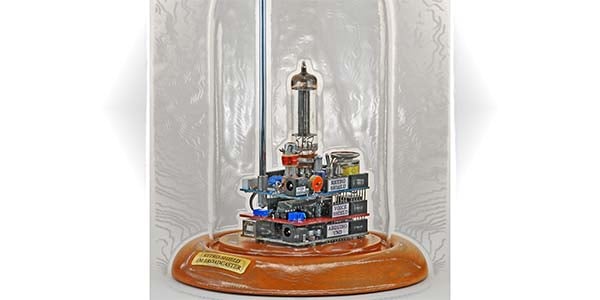
The Retro-Shield: Where the Past Meets the Present

THE RETRO-SHIELD: WHERE THE PAST MEETS THE PRESENT
Combine a vintage vacuum tube with an Arduino for an updated version of an AM broadcaster.

Several months ago, I bought a vintage Allied Radio Knight-Kit 12-in-1 Electronic Lab on eBay. It used a 12K5 low voltage vacuum tube instead of transistors. As I was wiring up my "wireless AM broadcaster" project, it hit me. Why not combine the past with the present? Put an Arduino with a vacuum tube shield — a Retro-Shield!

Build It Now!
Animatronics Book
Electronics: What’s Important from the Outside Looking In?

ELECTRONICS: WHAT’S IMPORTANT FROM THE OUTSIDE LOOKING IN?
Here’s how to do good by your favorite electronics hobby.

Keep studying, keep extending your practical electronics experience, and, above all, have some fun along the way.

Read It Now!
Do You Love Robots? - Subscribe To SERVO
Nuts & Volts On CD-ROM
Plant Monitor Kit
DIY RC Controller
Altaids Computer Kit
You are receiving this email because you have been a subscriber to Nuts & Volts Magazine, or have requested to receive our email newsletters. You may unsubscribe, change your email address or content preferences at any time through the links provided below.
Facebook
Twitter
Nuts & Volts Magazine | 2279 Eagle Glen Pkwy #112-481, Corona, CA 92883
951.371.8497 | editor | www.nutsvolts.com
T & L Publications, Inc, 2279 Eagle Glen Pkwy #112-481, Corona, CA 92883, United States, 951 371-8497

Unsubscribe Manage preferences

Good PCB Design, CC3200 Wi-Fi & IoT MCU Part 2, DotStar Light Painter, Respiratory Masks

Newsletter #221

View in browser
Nuts & Volts - Everythinmg For Electronics
PCBFabExpress
Good PCB Design

GOOD PCB DESIGN
Keep your project on schedule with good circuit board design.

Designing a circuit board for ease of manufacturing can not only help insure your project stays on schedule, it makes sure the redo’s aren’t left for someone else. You have control over at least some parts of the making process.

Read It Now!
1 GHz PC-Based, Real-Time MSO
Pico Technology
Announcing four new models of PicoScope 6000E Series oscilloscopes featuring 750 MHz or 1 GHz bandwidths, 4 analog and 16 digital channels, 8-bit fixed or 8/10/12-bit FlexRes and up to 4 GS of capture memory. Also launching are new A3000 Series active probes compatible with these scopes’ Intelligent probe interfaces.

Get More Details Here!

Advertisement

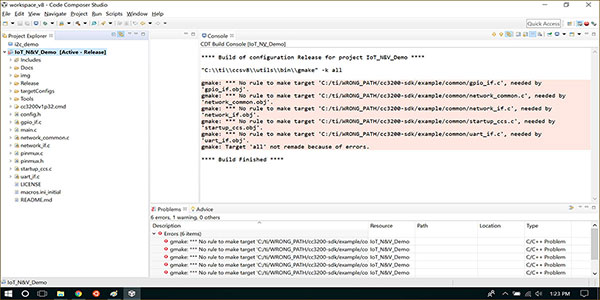
Ready Player 2: CC3200 Wi-Fi & IoT MCU — Part 2

READY PLAYER 2: CC3200 WI-FI & IoT MCU — PART 2

Working with CC3200 Launchpad and Code Composer Studio (CCS).

My article, “Build the IoT Sump Pump (or Pretty Much Anything IoT)” generated curiosity about some of the tools utilized to create the device. With the capabilities of CC3200 Launchpad and Code Composer Studio (CCS), we can further explore two more items of our device design: How to adopt a third-party project to work with your environment; and how to upload your code to the external Flash memory.

Read It Now!
Subscribe To Nuts & Volts
Build a DotStar Light Painter

BUILD A DOTSTAR LIGHT PAINTER
Use microcontrollers and a DotStar LED strip to develop custom photography from images you upload yourself.

Long exposure photography captures the path of light over time, smearing moving elements to produce a single photo which creates a new realm of artistic photography. However, popular subjects of light exposure photographs are uncontrollable (stars, car headlights, etc.), so we made a light painter using microcontrollers and a DotStar LED strip to develop custom photography from images uploaded by a user.

Build It Now!
Animatronics Book
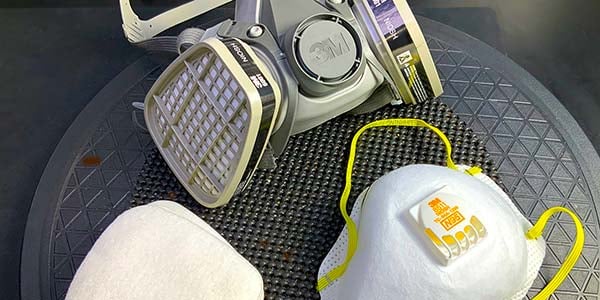
Respiratory Masks

RESPIRATORY MASKS
Respiratory masks should always be part of your safety tool arsenal.

The current virus epidemic aside, respiratory masks should be part of your permanent tool arsenal when working with chemical vapors or fine dust, along with goggles to protect your eyes.

Read It Now!
Do You Love Robots? - Subscribe To SERVO
Nuts & Volts On CD-ROM
Plant Monitor Kit
DIY RC Controller
Altaids Computer Kit
You are receiving this email because you have been a subscriber to Nuts & Volts Magazine, or have requested to receive our email newsletters. You may unsubscribe, change your email address or content preferences at any time through the links provided below.
Facebook
Twitter
Nuts & Volts Magazine | 2279 Eagle Glen Pkwy #112-481, Corona, CA 92883
951.371.8497 | editor | www.nutsvolts.com
T & L Publications, Inc, 2279 Eagle Glen Pkwy #112-481, Corona, CA 92883, United States, 951 371-8497

The Magic of Antennas, Transformer Based Power for Nixies, CC3200 Wi-Fi & IoT MCU, How Old is Old Enough?

Newsletter #220

View in browser
Nuts & Volts - Everythinmg For Electronics
PCBFabExpress
The Magic of Antennas

THE MAGIC OF ANTENNAS
If you really want to know what makes any wireless application work, it’s the antenna.

Here, we’ll summarize some of the most common types and make you aware of what an antenna really is and how it works.

Read It Now!
ExpressPCB
Transformer Based Power for Nixies

TRANSFORMER BASED POWER FOR NIXIES

Discover a new way to power your Nixies.

Nixies were introduced when vacuum tube hardware automatically provided the high voltage they require. These days, circuitry typically runs on five volts or less, so finding the +170V or so for Nixie anodes can be a bit of a challenge. Here are three transformer based ways to obtain that high voltage in line-powered semiconductor-based devices.

Read It Now!
Subscribe To Nuts & Volts
Ready Player 2: CC3200 Wi-Fi & IoT MCU — Part 1

READY PLAYER 2: CC3200 WI-FI & IoT MCU — PART 1
Working with CC3200 Launchpad and Code Composer Studio (CCS).

My previous article “Build the IoT Sump Pump (or Pretty Much Anything IoT)” generated curiosity about some of the tools utilized to create the device. It’s time to “ready Player 2” and penetrate deeper into the utilization of some of the software and hardware features that come with CC3200 Launchpad and Code Composer Studio (CCS).

Read It Now!
Do You Love Robots? - Subscribe To SERVO
How Old is Old Enough?

HOW OLD IS OLD ENOUGH?
One of the most often asked questions in my inbox is ‘how old is old enough to begin working with electronics?

The answer, of course, is that it depends on the individual, what you mean by ‘working with,’ and the amount of supervision provided by an experienced or at least alert adult.

Read It Now!
Nuts & Volts On CD-ROM
Plant Monitor Kit
DIY RC Controller
Altaids Computer Kit
You are receiving this email because you have been a subscriber to Nuts & Volts Magazine, or have requested to receive our email newsletters. You may unsubscribe, change your email address or content preferences at any time through the links provided below.
Facebook
Twitter
Nuts & Volts Magazine | 2279 Eagle Glen Pkwy #112-481, Corona, CA 92883
951.371.8497 | editor | www.nutsvolts.com
T & L Publications, Inc, 2279 Eagle Glen Pkwy #112-481, Corona, CA 92883, United States, 951 371-8497

Amateur Radio Weekly Newsletter – Week of April 24, 2021

Amateur Radio Weekly Newsletter

Ham radio news, commentary, giveaways, and more!
Celebrating 25 years of service – 1995-2020
Over 8,000 subscribers!
Unsubscribe

Saturday, April 24, 2021

  • AmateurLogic 155: April Showers
    AmateurLogic.TV Episode 155 is now available for download. Pi Pico OLED display. Hamshack Hotline Beyond BLF. FCC licensed by rule radio services and you. Tower failure follow up. New RF Exposure rules updated. Name that part. 1:11:40 Download YouTube
  • LHS Episode #408: Let’s Get Metaphysical
    Hello and welcome to the 408th installment of Linux in the Ham Shack. In this short topics episode, the hosts discuss the new, upcoming YOTA contest, Pop! OS, the new …
  • 10-10-10 Event-Happy B-day WØC-SOTA
    May 1st, 2010 – WGØAT/Steve sent a CQ from Mount Herman in Colorado and thus inaugurated the birth of SOTA in WØ land with 33 CW contacts around the world. Fast forward to today, Steve is still sending CQs from Mount Herman (WØC/FR-Ø63), and other peaks, almost on a daily basis but he also inspired countless hams […]
  • Hunting For NDBs In CLE267
    YUT – Replulse Bay, NU (courtesy: ve3gop.com) It’s CLE time! ‘CLE’s are ‘Co-ordinated Listening Events, and NDB DXers around the world focus their listening time on one small slice of the NDB spectrum. It’s another …

Thank you for being an AmateurRadio.com reader and subscriber to the Amateur Radio Newsletter.

Do you like to write? Please consider submitting an article.

Matt W1MST
Managing Editor
editor

Twitter / Facebook

How to set up your own ham radio blogGet started in less than 15 minutes

AmateurRadio.com
P.O. Box 45
Hampden ME 04444
USA

Repairing Circuit Boards, A Metronome for Musicians, Adding FM to an AA5 AM Radio, Know Your Basics

Newsletter #219

View in browser
Nuts & Volts - Everythinmg For Electronics
Electronics Auction
Repairing Circuit Boards

REPAIRING CIRCUIT BOARDS
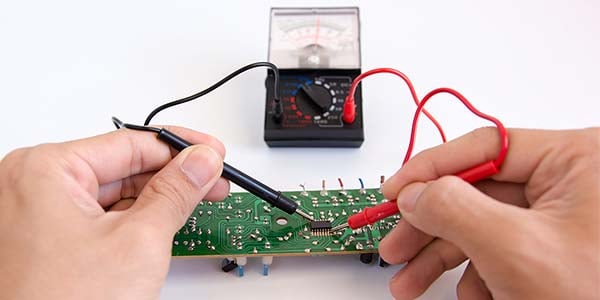
Repairing any kind of PCB can seem intimidating, but a methodical approach helps in finding and fixing problems quickly.

Anyone interested in electronics is bound to encounter a dead board or two, whether it’s their own or someone needing help. What’s the best approach when confronted with a PCB that doesn’t do what it’s supposed to do? Here are several methodical steps to take, that range from simplistic to advanced.

Read It Now!
PCBFabExpress
The Sirius Metronome for the Serious Musician

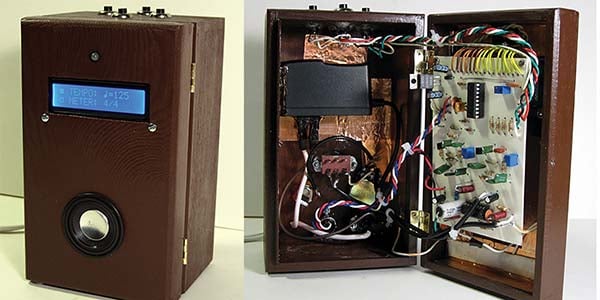
THE SIRIUS METRONOME FOR THE SERIOUS MUSICIAN

One of the most important tools any musician needs is a metronome.

The circuit described here sports a number of impressive features that even more expensive commercial units can’t provide.

Build One Now!
Amplified Parts
Adding FM Capability to an All American Five AM Radio

ADDING FM CAPABILITY TO AN ALL AMERICAN FIVE AM RADIO
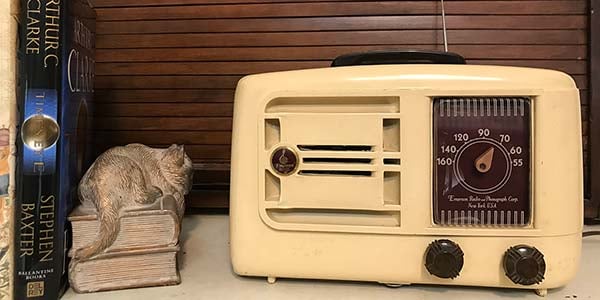
Get FM capability without destroying the AM portion of your AA5 tube-type radio.

After retirement a few years back, I started collecting AA5 radios, restoring and selling them. People would ask whether they picked up FM and, of course, they did not. I started thinking about how to add FM capability without destroying the AA5’s AM operation. Here is my solution.

Read It Now!
Subscribe To Nuts & Volts
Know Your Basics

KNOW YOUR BASICS
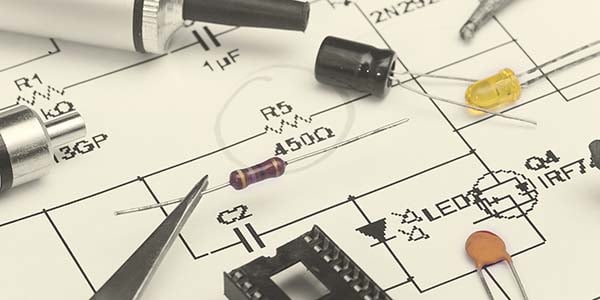
To master the art of electronics, it’s important to learn the basics.

I’m talking Ohms Law, serial and parallel discrete components, and simple signal sources. This might seem self-evident, but since the introduction of the increasingly popular microcontrollers and standard sensors and effectors, it’s possible to create electronic devices without ever touching a capacitor or resistor.

Read It Now!
Do You Love Robots? - Subscribe To SERVO
Nuts & Volts On CD-ROM
Plant Monitor Kit
DIY RC Controller
Altaids Computer Kit
You are receiving this email because you have been a subscriber to Nuts & Volts Magazine, or have requested to receive our email newsletters. You may unsubscribe, change your email address or content preferences at any time through the links provided below.
Facebook
Twitter
Nuts & Volts Magazine | 2279 Eagle Glen Pkwy #112-481, Corona, CA 92883
951.371.8497 | editor | www.nutsvolts.com
T & L Publications, Inc, 2279 Eagle Glen Pkwy #112-481, Corona, CA 92883, United States, 951 371-8497